
WHAT HAPPENS WHEN MAASTRICHT’S HISTORY GETS A NEW OUTFIT?
On 13 September, Maastricht’s history comes to life through fashion, performance and parade. During the Maastricht Helden Fashion Show, the ‘stars of the city’ step out of the history books and return to the streets of Maastricht. Local designers give historical figures, cultural icons and contemporary stars a new identity through contemporary fashion. Inspired by the renowned work of Fons Olterdissen, local figures come to life in a parade.
For this project, FASHIONCLASH brought together a group of local designers. Each designer was given a Maastricht icon as a source of inspiration and translated the character, story and significance of that icon into a contemporary outfit. Not as a literal reconstruction, but as a personal interpretation: what would a historical figure look like if you were to encounter them again today?
From the Mooswief and Pieke Dassen to Saint Servatius and Charlemagne, and from Jan Pieter Minckeleers and Petrus Regout to Emma Kok and André Rieu. Together, they form a remarkable mix of historical figures, cultural icons and contemporary stars, each of whom is part of Maastricht’s story in their own way.
Program
Maastricht Helden Fashion Show & Local Designers’ Own Work
14:00 – 14:30
Maastricht Helden Fashion Show & Local Designers’ Own Work
15:00 – 15:30
Maastricht Helden Fashion Show & Local Designers’ Own Work
16:00 – 16:30
City Parade
17:00 – 20:00
A festive procession bringing the heroes of Maastricht through the city.
The stars of the city are:
Mooswief · Elisabeth Strouven · Pieke Dassen · Anna Cornelia Wijnands · André Bonhomme · Jan Pieter Minckeleers · Emma Kok · André Rieu · Willy Brokamp · Mestreechter Geis · de Stedenmaagd · de Godin van de Roem · Sint Servaas · Karel de Grote · Henric van Veldeke · Pieter en Franciscus Romanus · Matthaeus Herbenus · Petrus Regout · Edmond Hustinx · Alexandre Batta.
Designed by:
Senna Cuenen · Chiron Floris · Jessie Romkens · Max Niereisel & Deniece Clermonts · Michelle Cornelissen & Sabina Schreurs · Wievien Alberts · Emma Magermans · Marte Morel · Jolieke Kessels · Linda Friesen · Floris van Lammeren ·Students of Scenography & Costume Design at Toneelacademie Maastricht (Demi Overmars, Roana Svetlik, Merlijn Vermeulen, Kyra Frijnts, Katharina Krämer, Manon Peters, Mats Gerrards, Sigrid Gerritse)
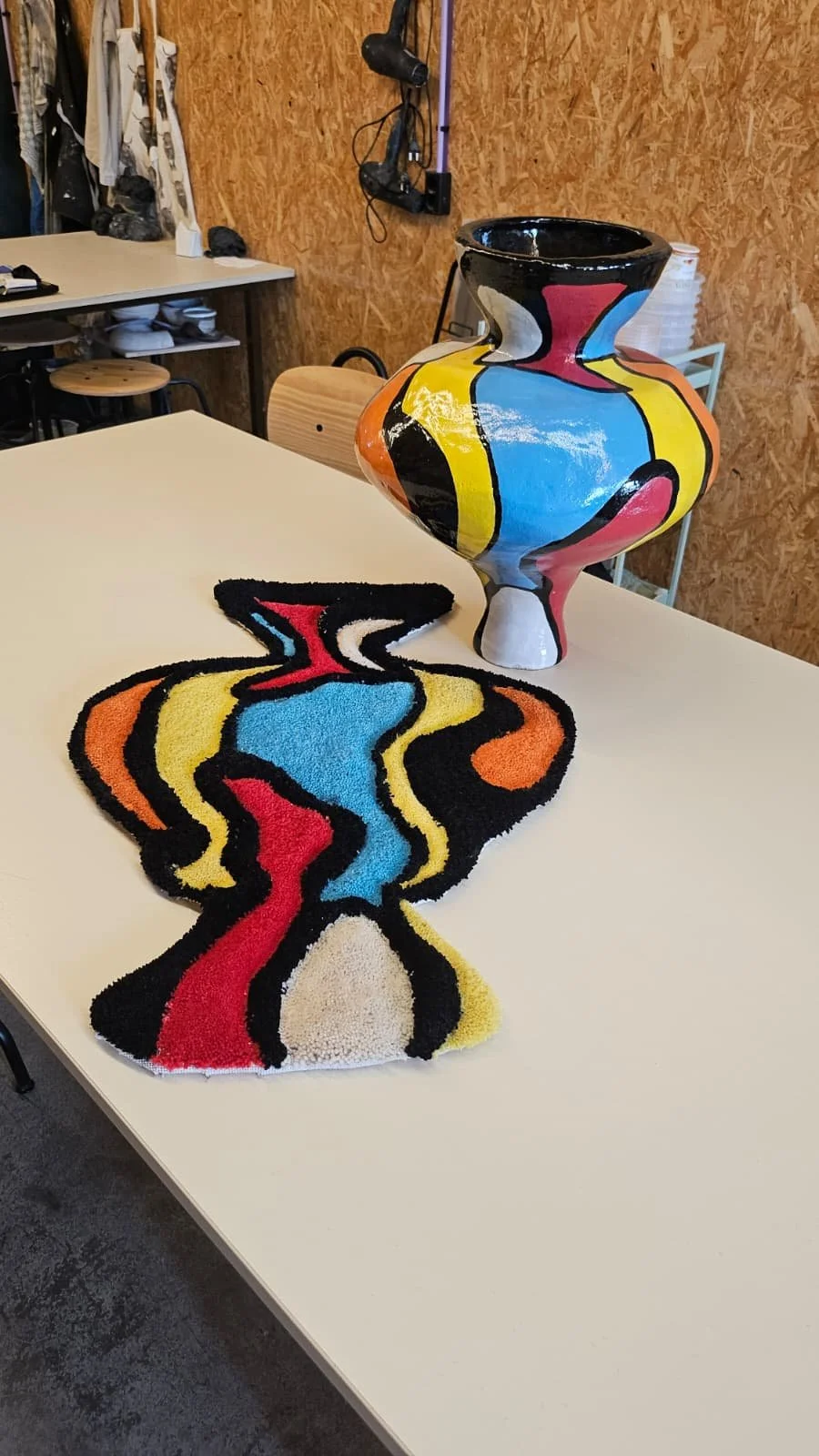
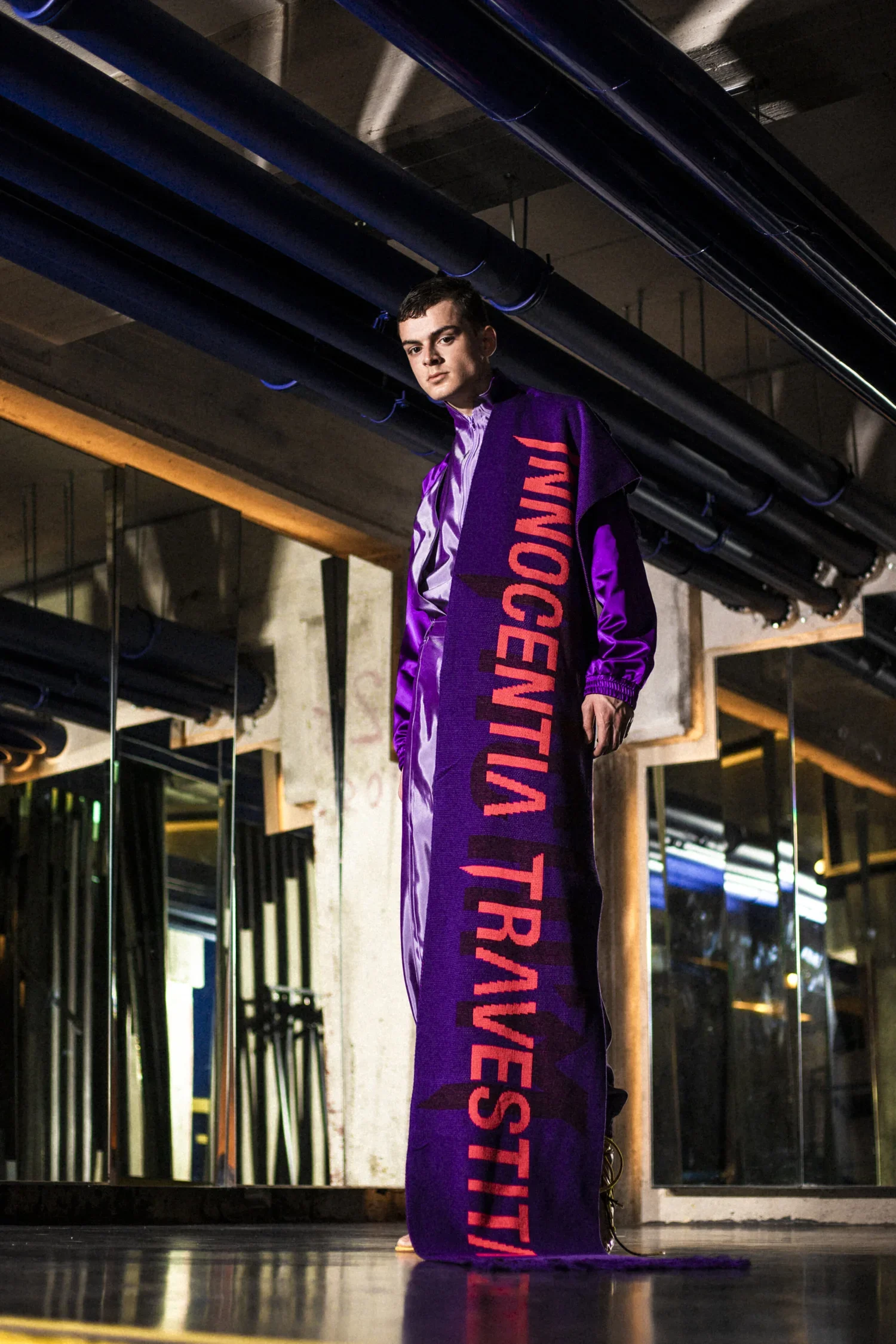
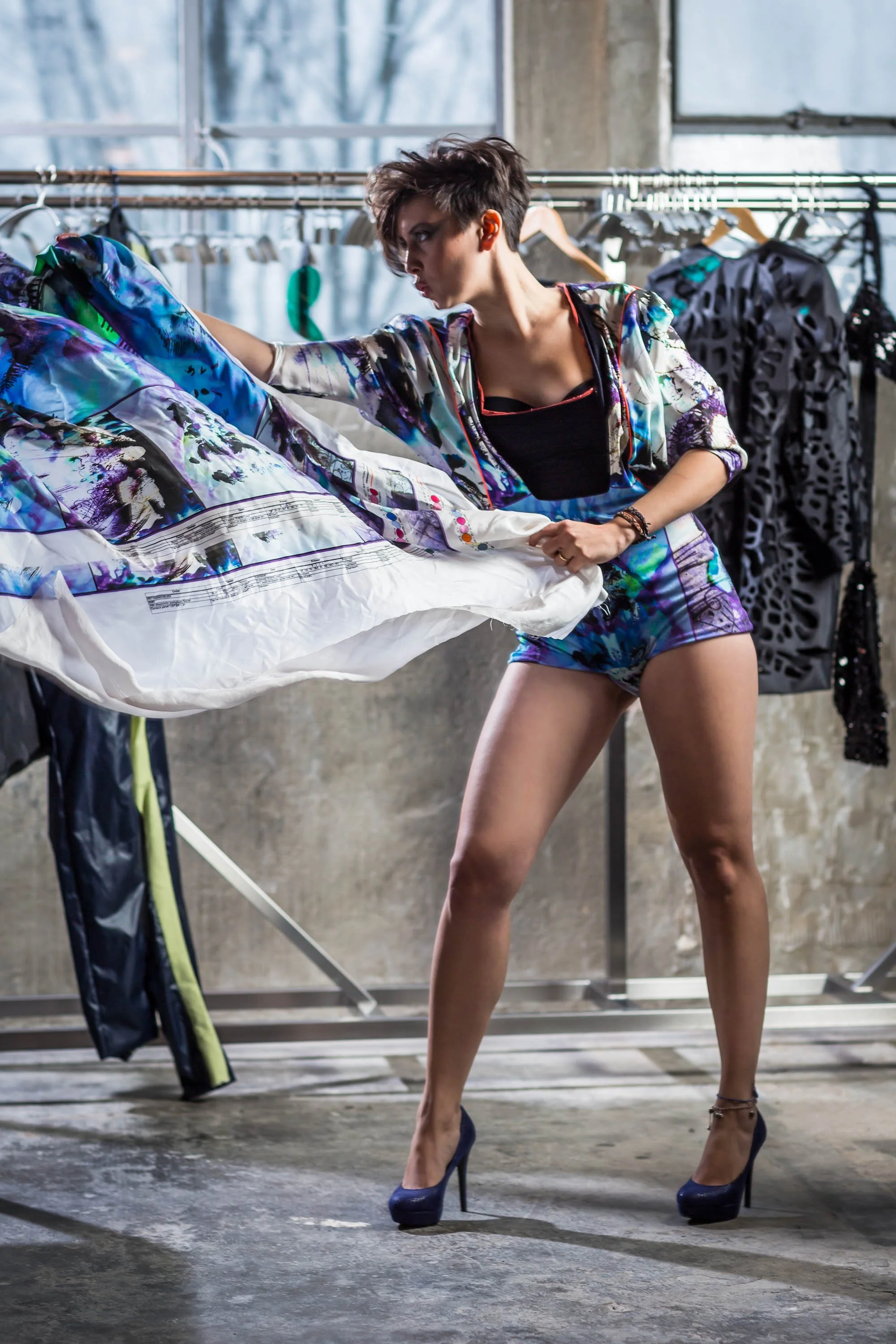
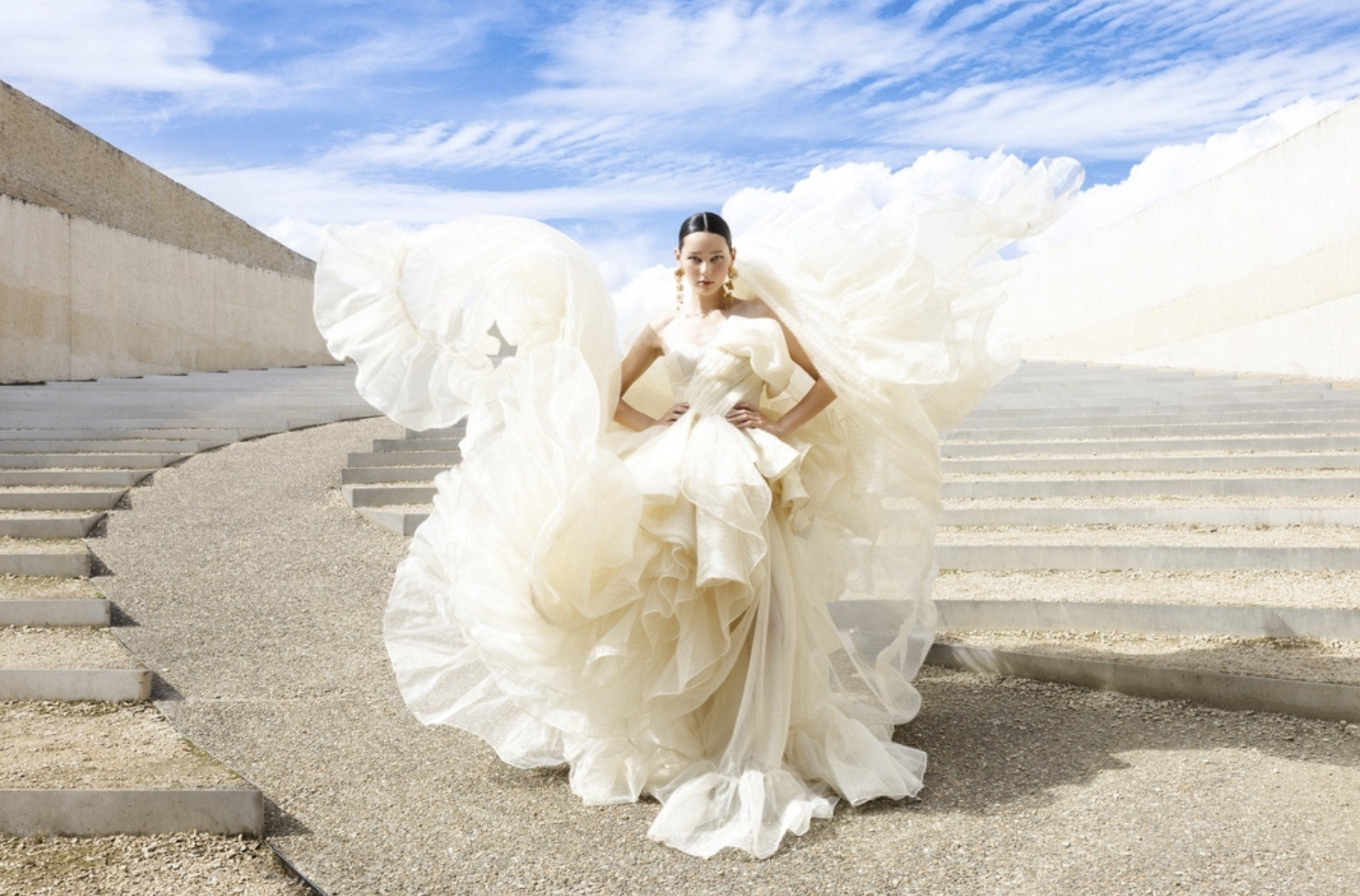
Alongside the outfits specially designed for the parade, the designers are also presenting work from their own practices.
The images offer a glimpse into the designers’ work. Curious to see the outfits created for the stars of the city? Come and see the final results on September 13!
Senna Cuenen
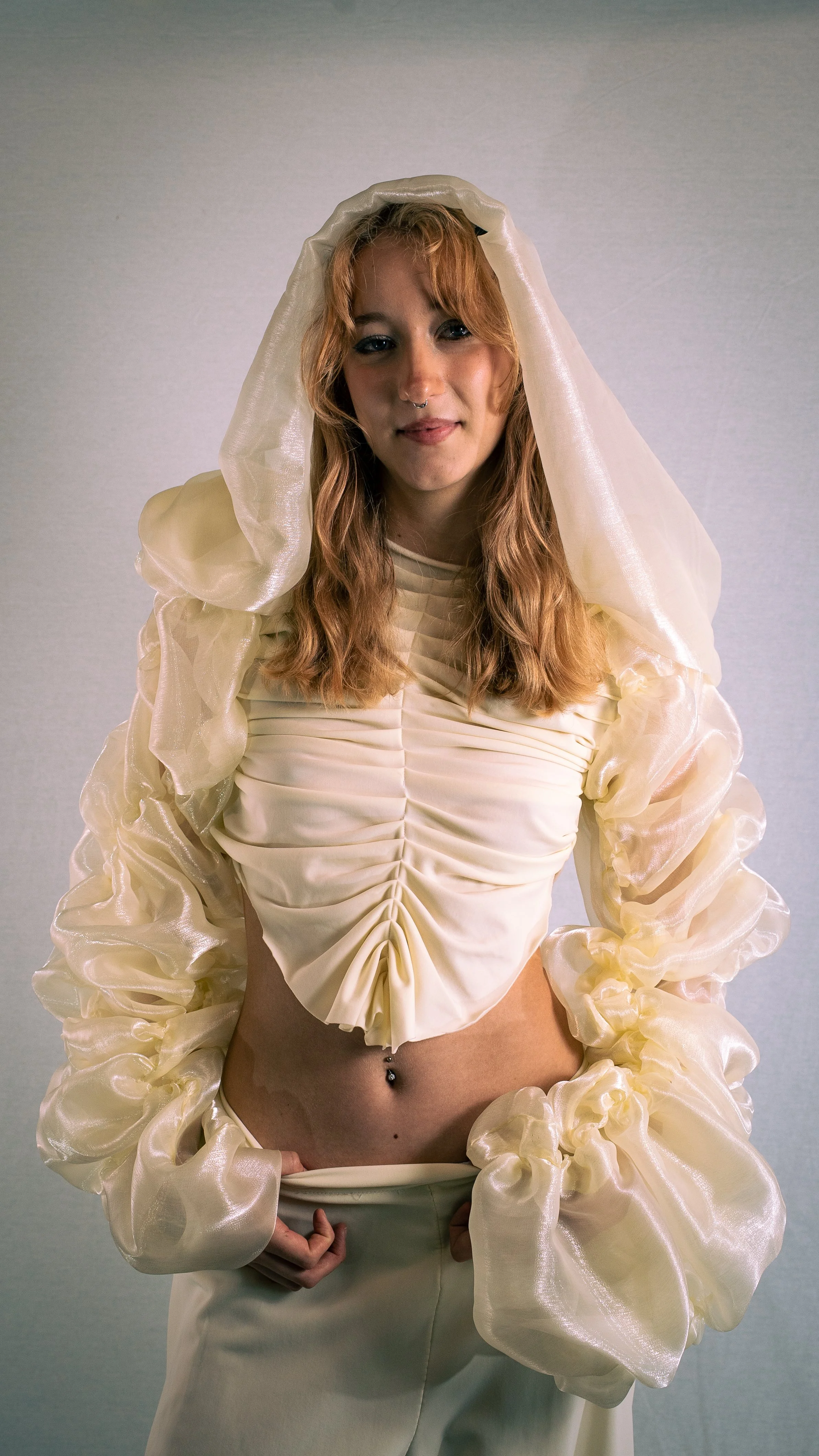
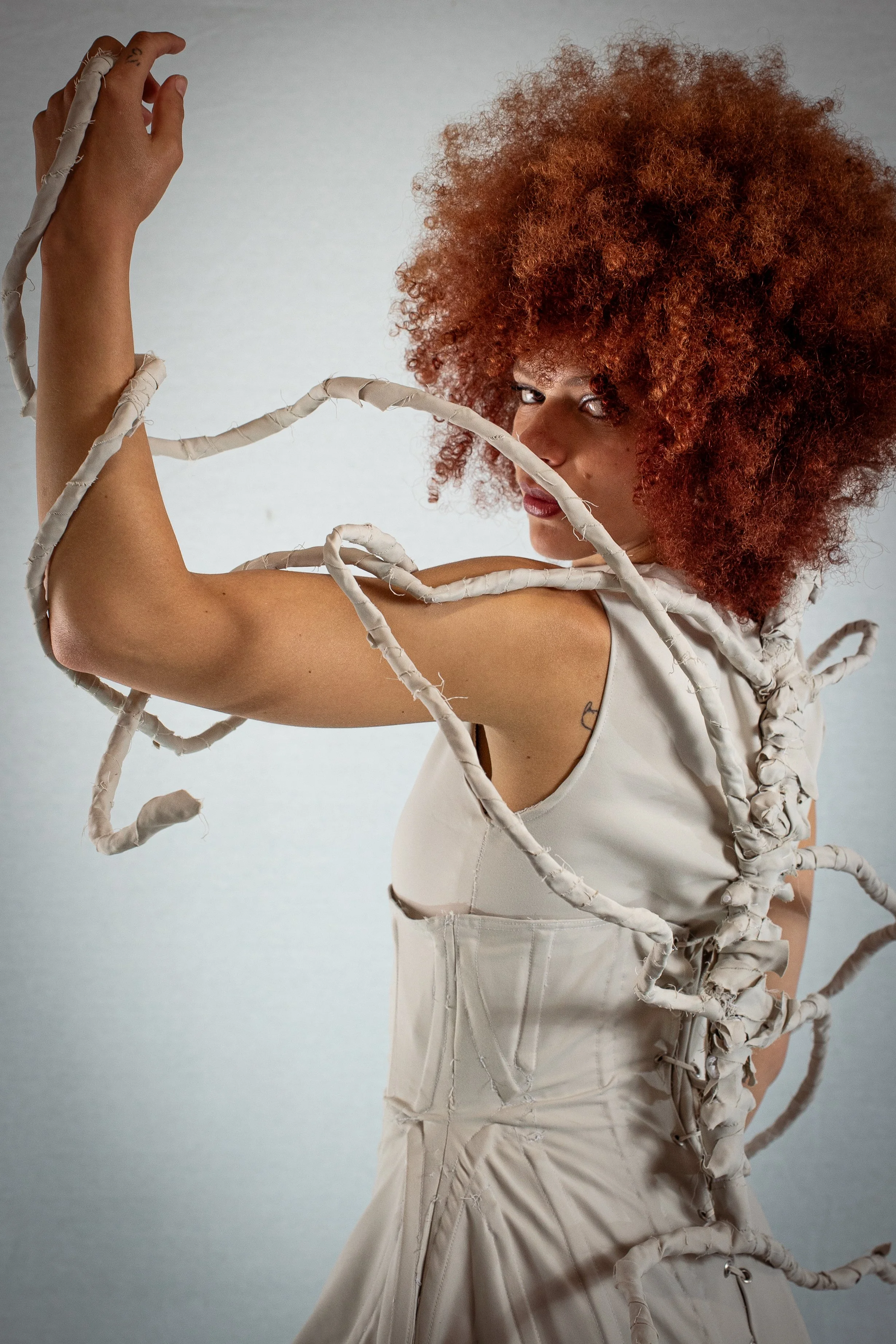
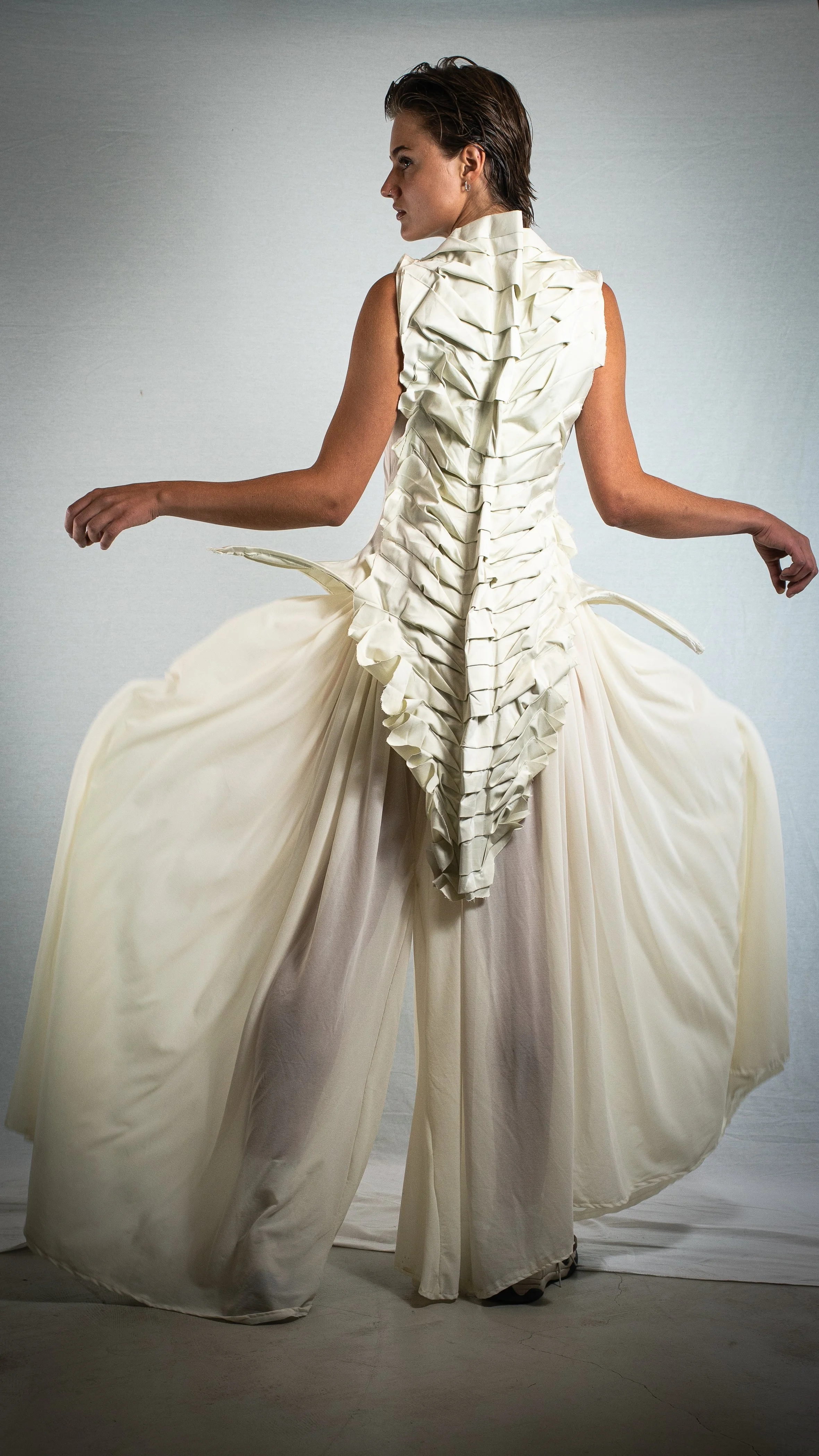
Senna Cuenen, born and raised in Maastricht, is a final-year student at the HKU University of the Arts Utrecht. In her work, she is constantly searching for her own style and artistic identity. She is passionate about storytelling through fashion and is developing her own visual language within textiles and design.
Paired with:
’t Mooswief
What appealed to you about this person or their story?
I am a true ‘Vastelaovend’ celebrant. I have been celebrating carnival from a very young age — even from my pram — having inherited the tradition from my parents. And when you think of carnival, you naturally think of ’t Mooswief as well. Like most people in Maastricht, I immediately feel a sense of joy when I see ’t Mooswief hanging above the Vrijthof. It means that we can finally celebrate carnival again. And when Mooswief is taken down, that joy gives way to sadness, because it means we have to wait another year.
For me, ’t Mooswief is a symbol of carnival, the conviviality that comes with it, and the sense of togetherness with friends and family that I look forward to every year.
How did you translate this into your design?
With my design, I wanted to capture the carnival spirit through specific elements and carnival colours, while also honouring the origins of ’t Mooswief: the women from the villages surrounding Maastricht who sold their vegetables at the Maastricht market. Just like the Carnival Prince, my Mooswief therefore wears a vegetable wreath made entirely from fabric around her neck.
With my design, I want to highlight the history of ’t Mooswief while also showing how much she means to me and to Mestreechter Vastelaovend.
Chiron Floris
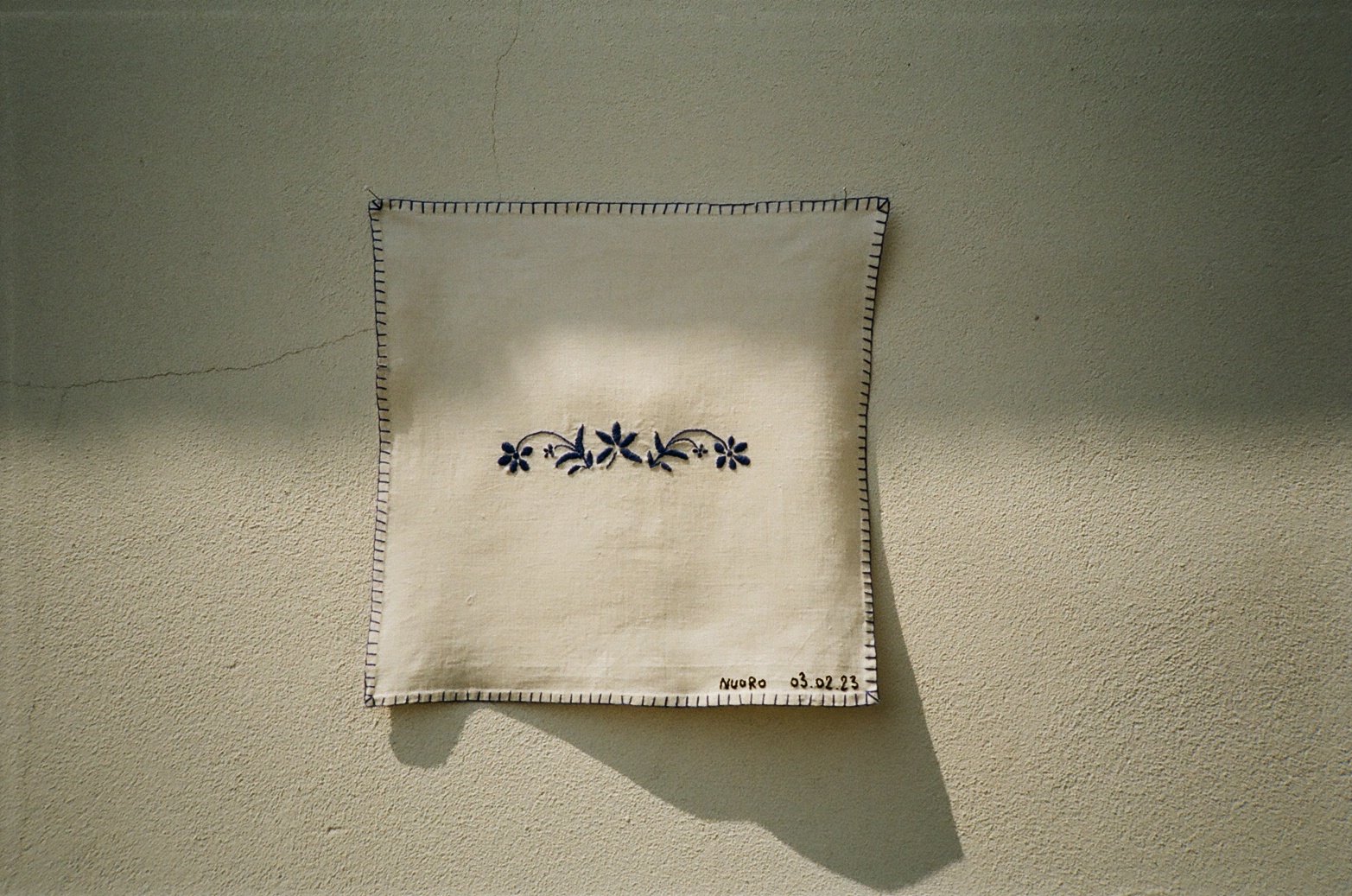
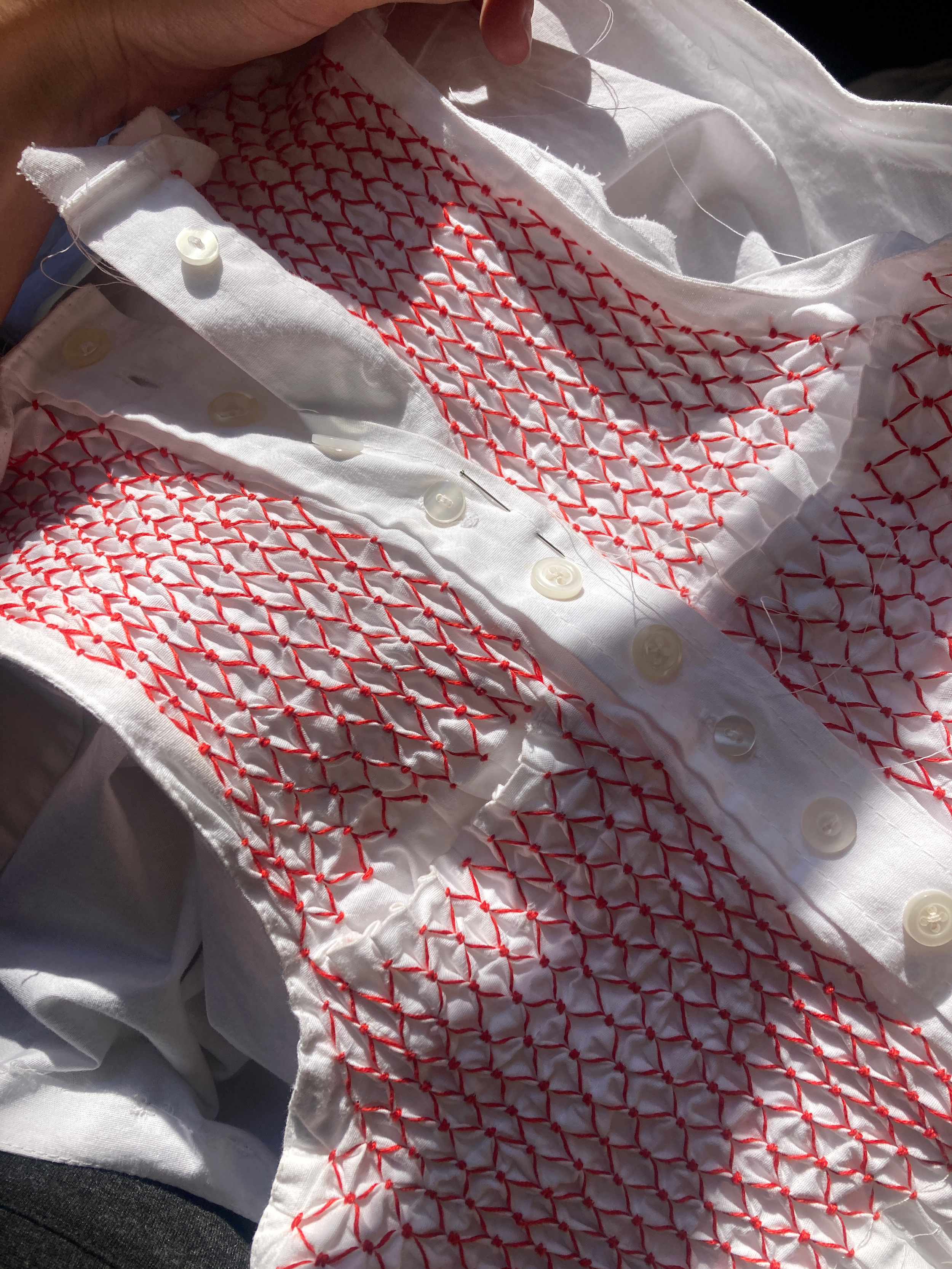
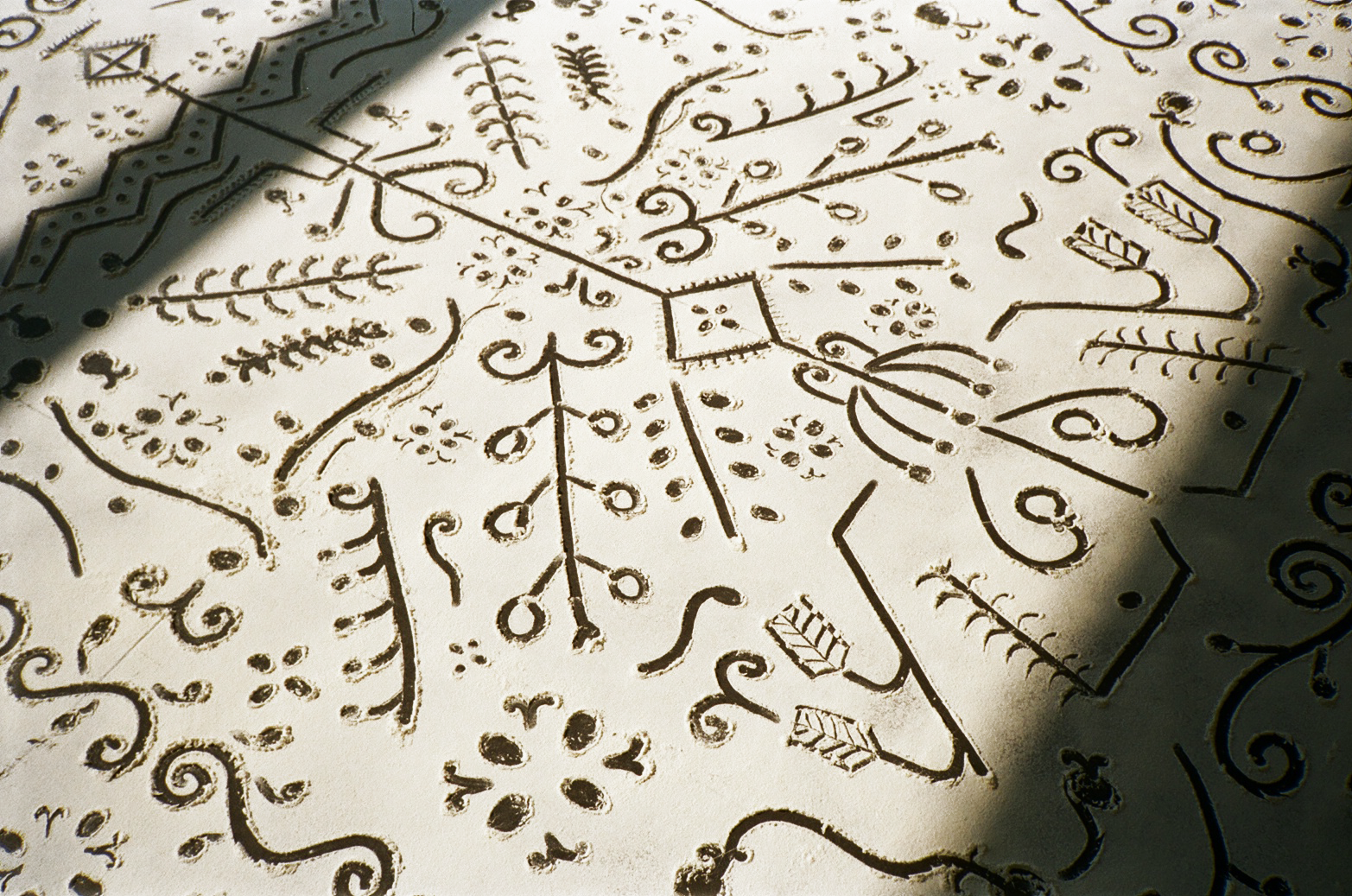
Chiron Floris explores how traditional crafts and materials can find a place within contemporary applications. In her work, she connects textile crafts to themes such as memory, relationships, community and cultural knowledge. She works with techniques including embroidery and bobbin lace, creating textile works and costumes both independently and on commission. From her studio, she also develops workshops that place craftsmanship and the sharing of knowledge at their centre.
Paired with:
Elisabeth Strouven
What appealed to you about this person or their story?
I was inspired by the way Elisabeth Strouven devoted time and attention to people in need of help. This form of care, known in the Maastricht dialect as zörg drage, became the starting point for my design. In Elisabeth’s time, among others, people suffering from the plague were neglected. Today, the way we treat and consume textiles is one of the things that calls for our attention.
How did you translate this into your design?
The costume is made from second-hand cotton shirts. By giving the materials time and attention, using careful embroidery and smocking techniques, I wanted to make their value visible again. In this way, the design pays tribute to Elisabeth Strouven and her way of caring for others.
For a woman of her time, Elisabeth did something quite extraordinary: she wrote a book about her life. This inspired me to highlight the word respect in an embroidered book, inviting the viewer to reflect on the way we treat textiles today.
A personal element also comes through in the handmade leather shoes. Elisabeth was the daughter of a shoemaker, and I am the granddaughter of a shoemaker. Using my grandfather’s sewing machine, I embroidered a red motif onto the leather of the shoes, which I originally made during my master’s studies at KASK.
The colours of the costume are inspired by a well-known image of Elisabeth Strouven and, at the same time, perhaps not entirely coincidentally, form the colours of the Maastricht flag. It is the city where we were both born and where Elisabeth shaped her life and work. This makes it especially meaningful for me to create something for this local heroine.
Jolieke Kessels
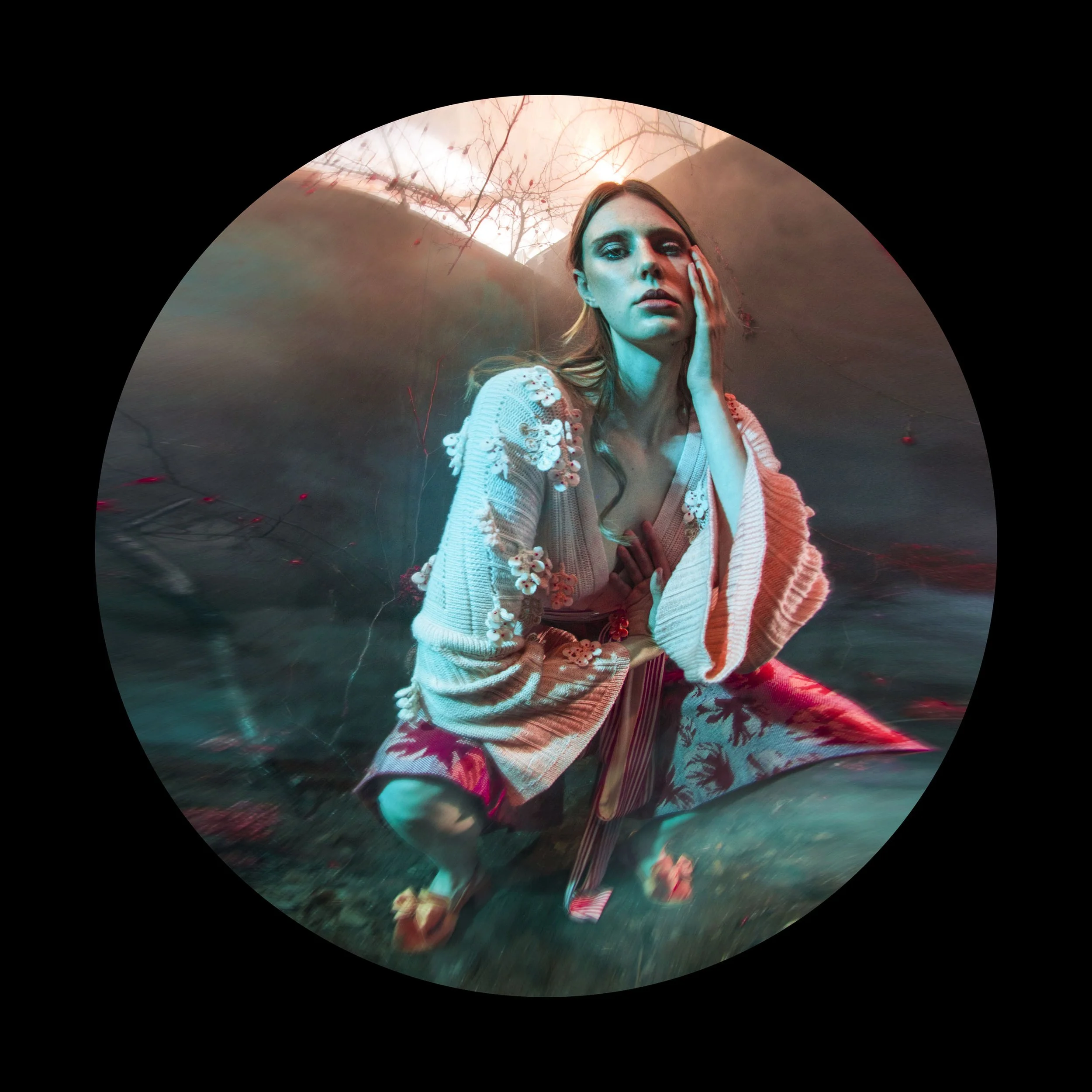
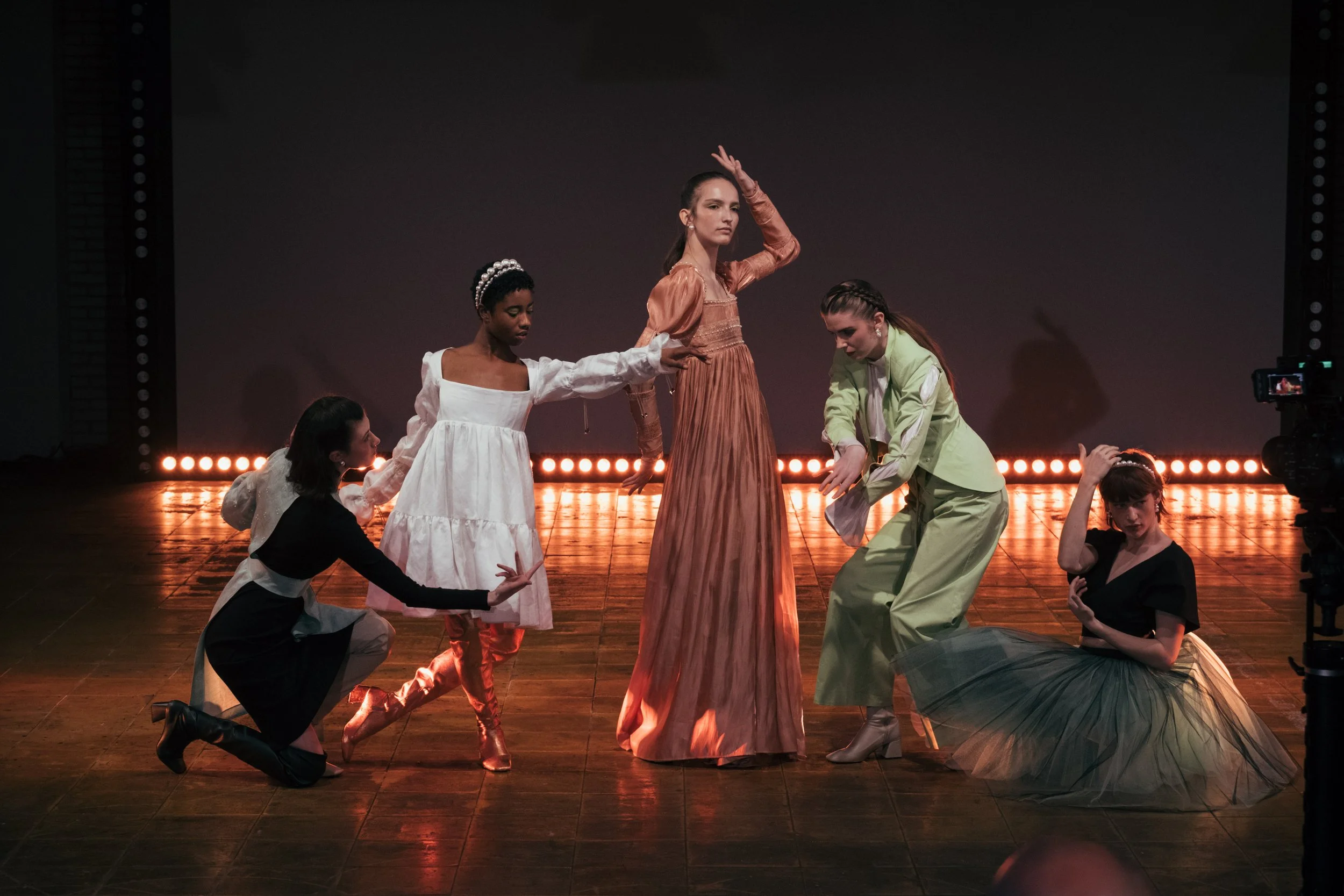
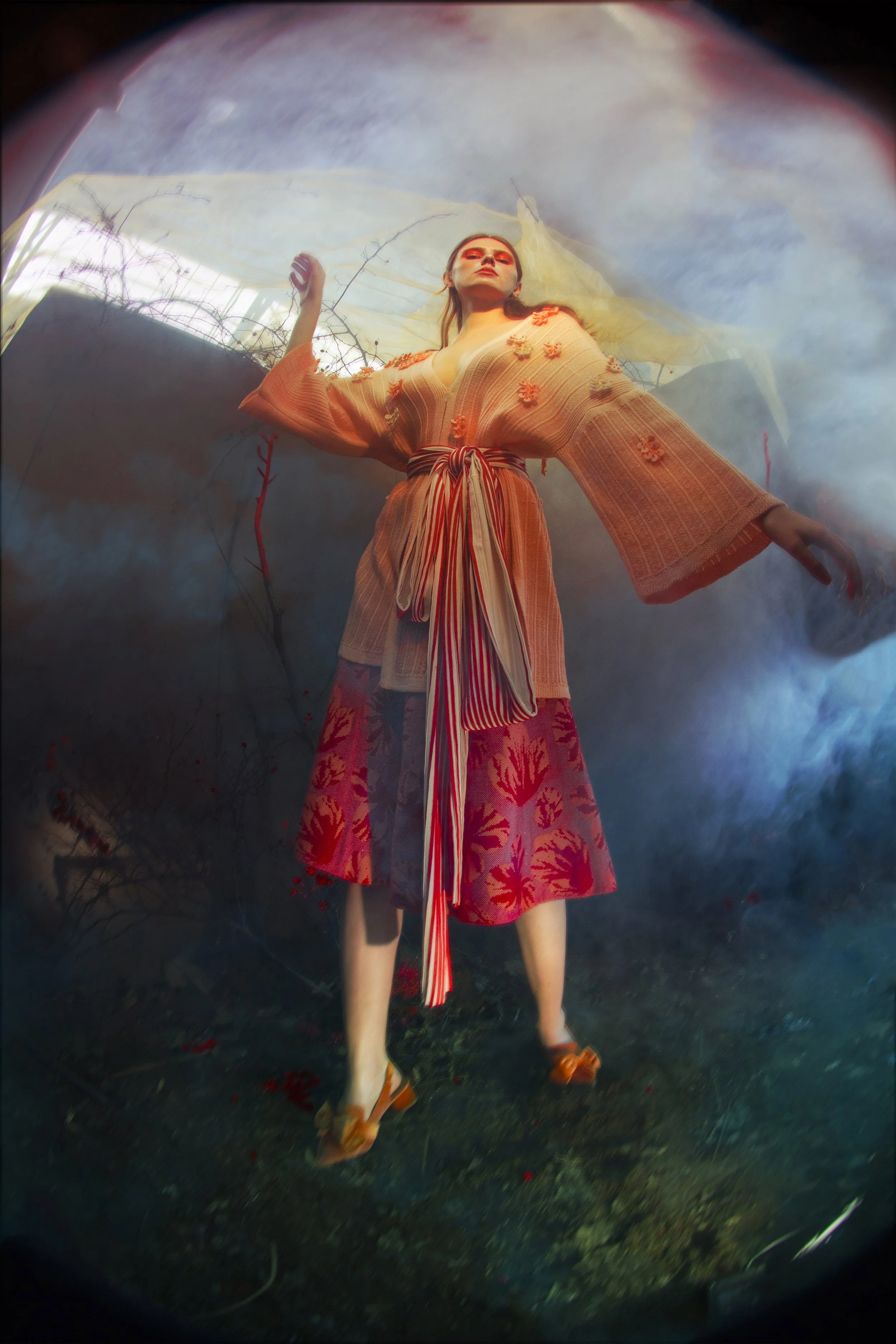
Jolieke Kessels is a freelance textile maker and designer. She studied fashion and textiles at the art academy in Maastricht. After graduating, she worked in various alterations and garment production studios, where she gained experience in adapting, producing and sampling clothing. Since then, she has enjoyed teaching sewing classes and workshops in Maastricht. Her own work is characterised by contemporary romantic looks, inspired by historical techniques and silhouettes.
Paired with:
Saint Servatius
What appealed to you about this person or their story?
The beautifully decorated, golden Shrine of Saint Servatius, which houses his relics, was my starting point. On the side depicting Christ, there is a female face carved from amethyst. Because women are often underrepresented in the history of the Church, this detail immediately caught my attention. I was also drawn to the contrast between the deep purple of the amethyst and the radiant gold.
How did you translate this into your design?
I was inspired by this contrast and incorporated it into my outfit. To me, the damaged little face symbolises an unstoppable woman who continues to shine, despite the overwhelming amount of gold surrounding her.
Emma Magermans
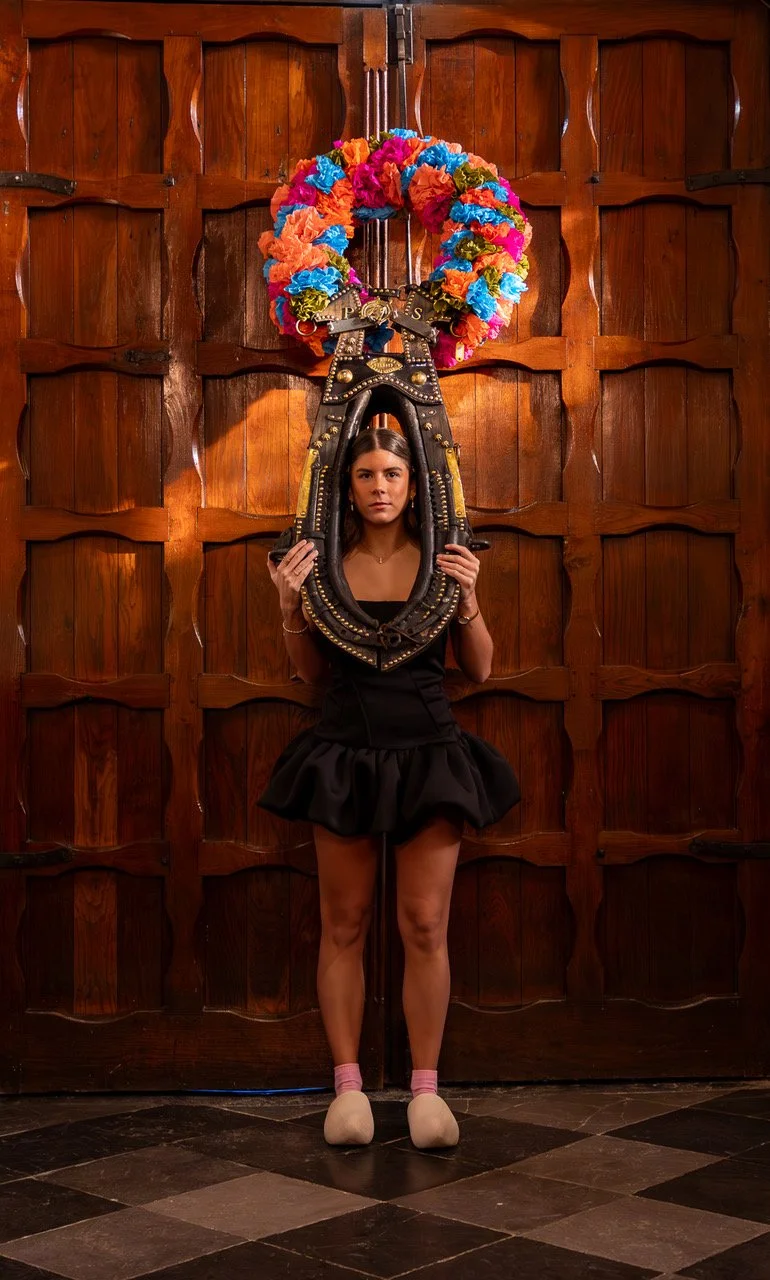
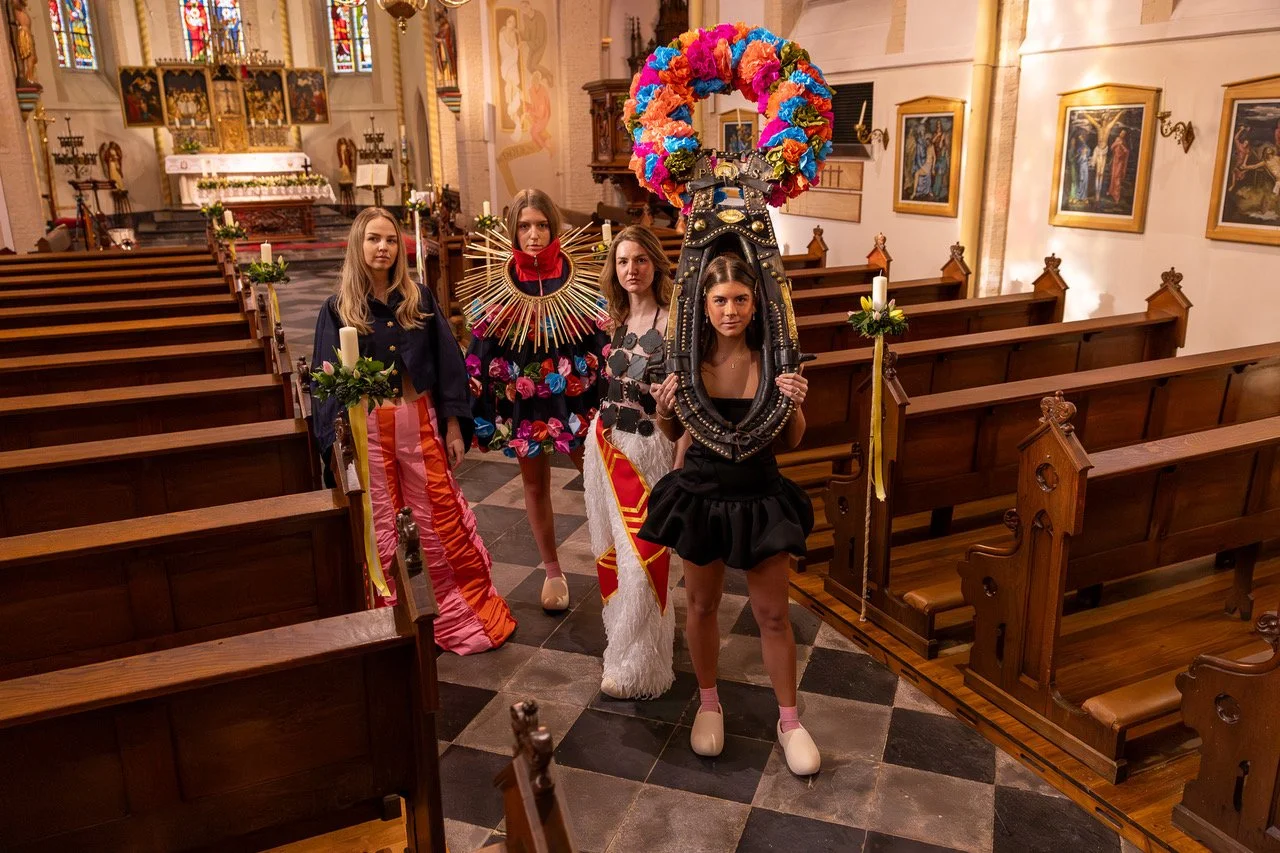
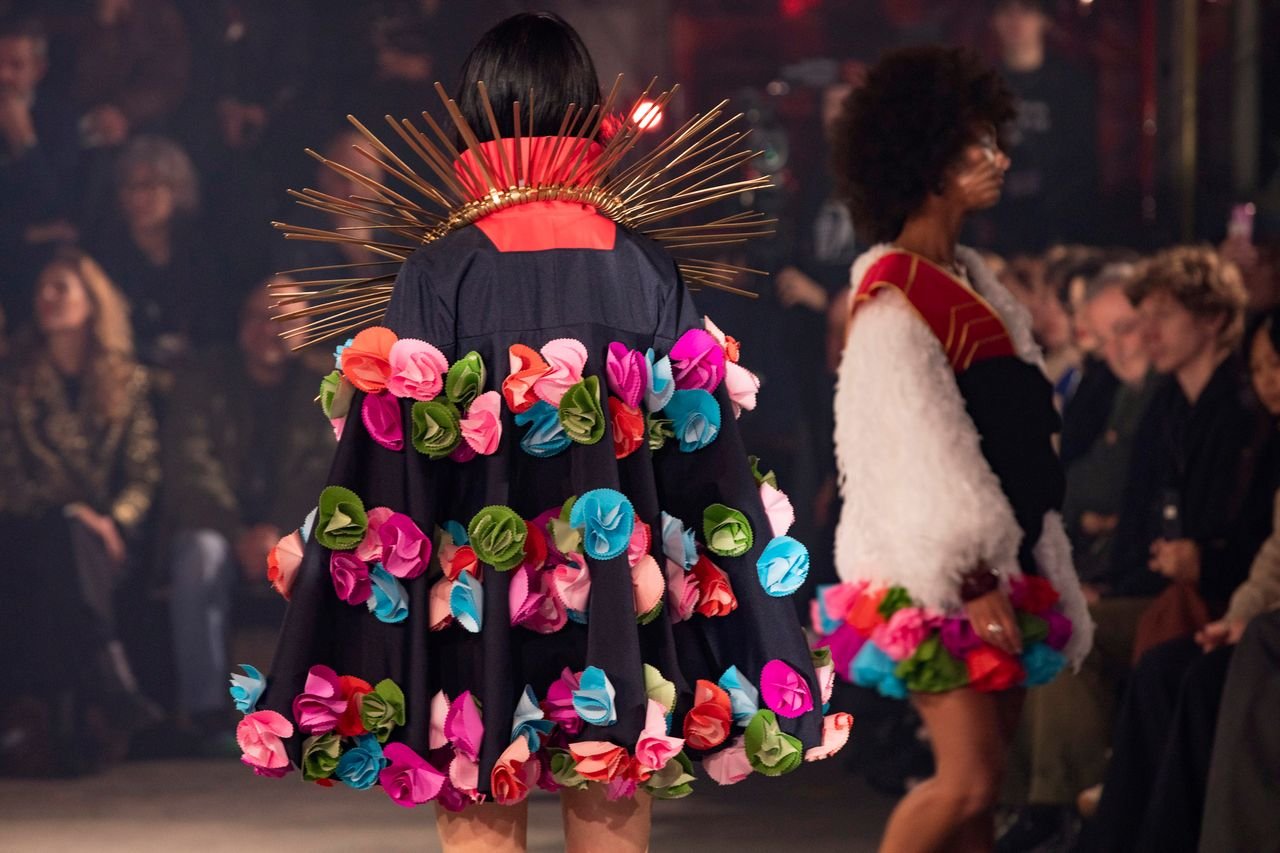
Emma Magermans grew up in Mheer. From an early age, she has been fascinated by fashion and has always enjoyed being creative. After completing the Junior Fashion Design programme at Summa College in Eindhoven, she interned with, among others, Christian Lagerwaard in Maastricht and Marlou Breuls Creative Studio in Amsterdam. She then decided to further develop her skills at the Amsterdam Fashion Institute (AMFI), where she recently graduated in Fashion Design.
Paired with:
The Maiden of the City (De Ingel vaan Mestreech)
What appealed to you about this person or their story?
What appeals to me about De Ingel vaan Mestreech is that she represents different sides of Maastricht. She stands for freedom and protection, but also for the city’s identity, pride and traditions. As a guardian angel, she embraces the city’s coat of arms and, in a way, the people and their shared history as well.
I am particularly drawn to the combination of strength and femininity. I also appreciate that she has not only a protective role, but a unifying one as well. She embodies the distinct character of Maastricht and the city’s warm, Burgundian spirit. It is precisely this combination of strength, femininity and identity that I find interesting to translate into fashion from my own perspective.
How did you translate this into your design?
In my design, I translate the different qualities of De Ingel vaan Mestreech into fashion in a contemporary way. The combination of strength, protection, femininity and connection is a particularly important source of inspiration.
These elements come together in the shape, silhouette and overall presence of the design. Rather than literally copying the recognisable features of De Ingel, I chose to reinterpret them in a new and personal way.
Jessie Römkens
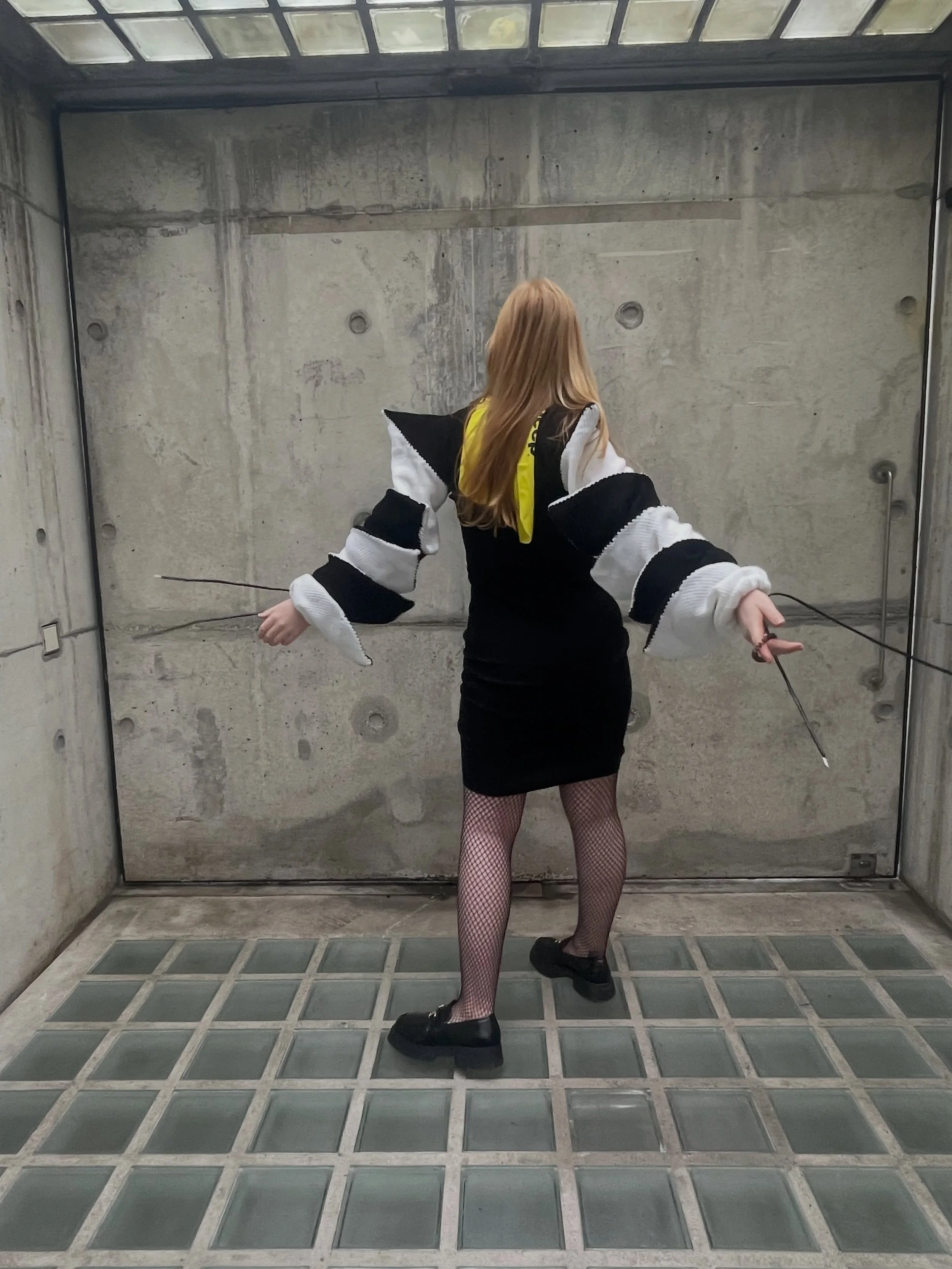
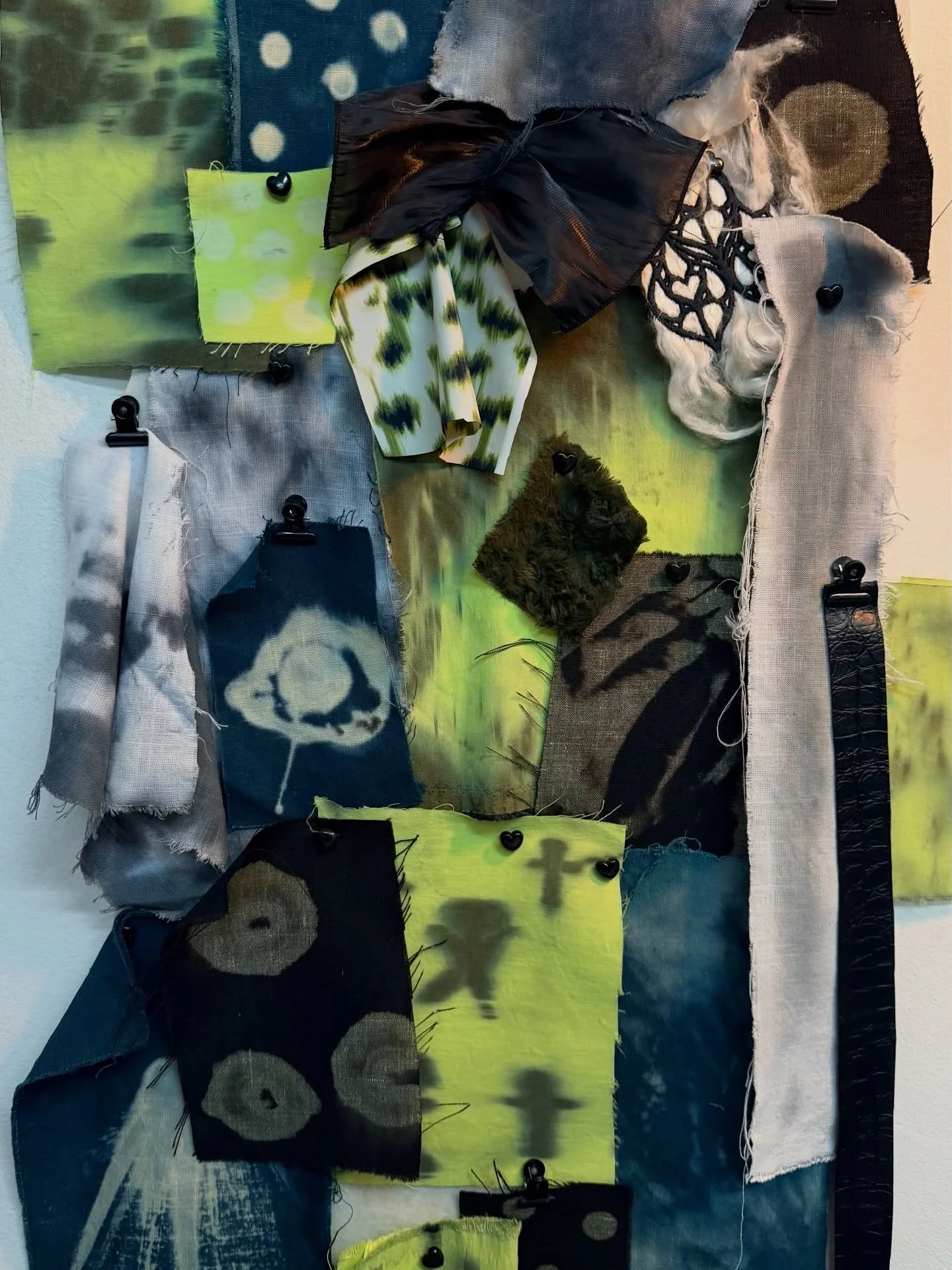
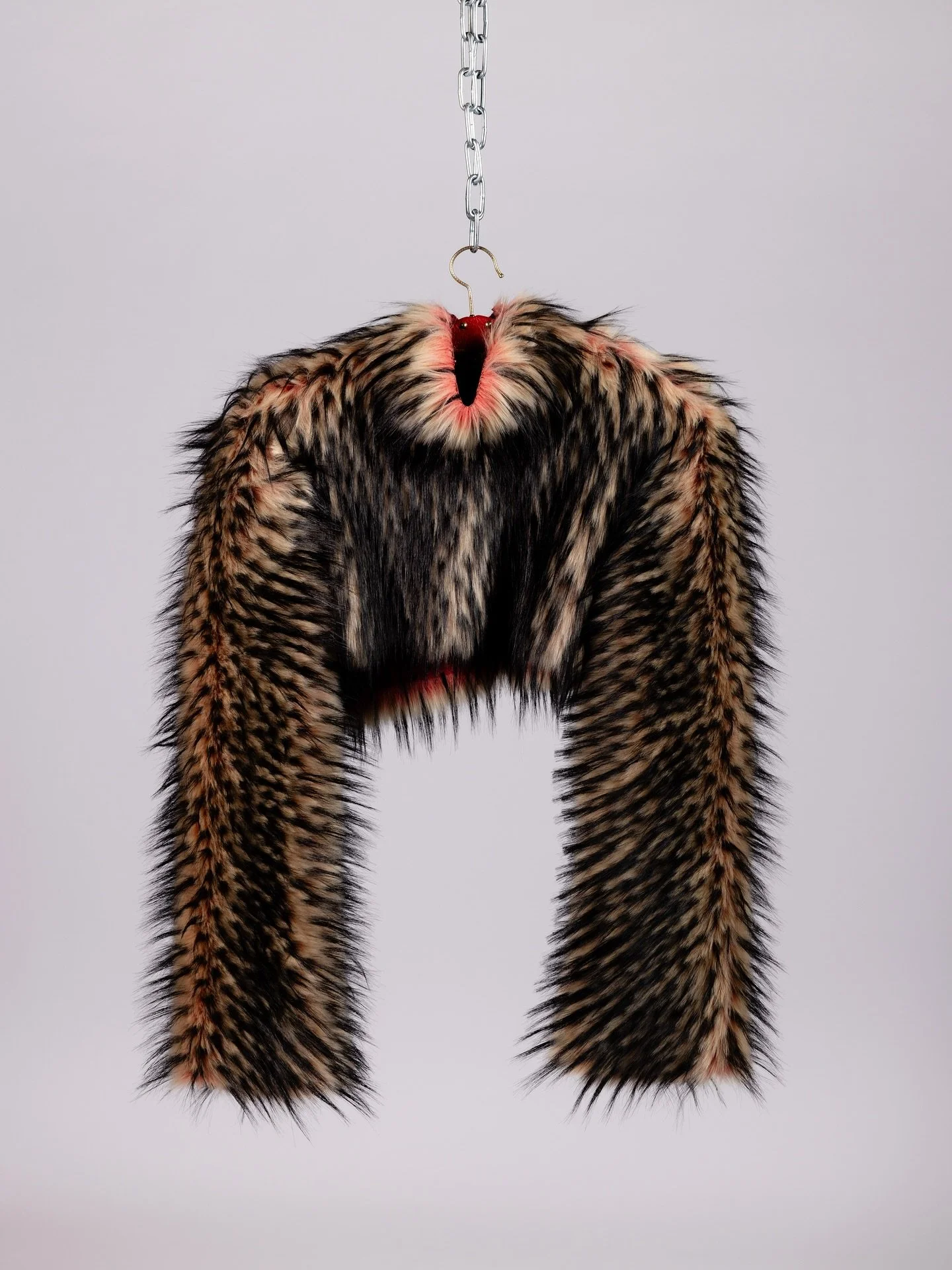
Jessie Römkens is a fashion designer and the founder of StudioJessie in Heerlen. In her work, she enjoys playing with contrasts between hard and soft, raw and refined, and dark and expressive. Music, performance and experimental use of materials are important sources of inspiration for her designs. From her studio, she creates one-of-a-kind fashion and stagewear, while also teaching sewing classes and creative workshops.
Paired with:
Emma Kok
What appealed to you about this person or her story?
What appeals to me about Emma is that she does not try to hide vulnerability, but instead transforms it into strength. She does not allow herself to be defined by her illness; she uses her voice both literally and figuratively, creating space for others in the process. For me, it is precisely this combination of vulnerability and strength that makes her such an inspiring person.
Wievien Alberts
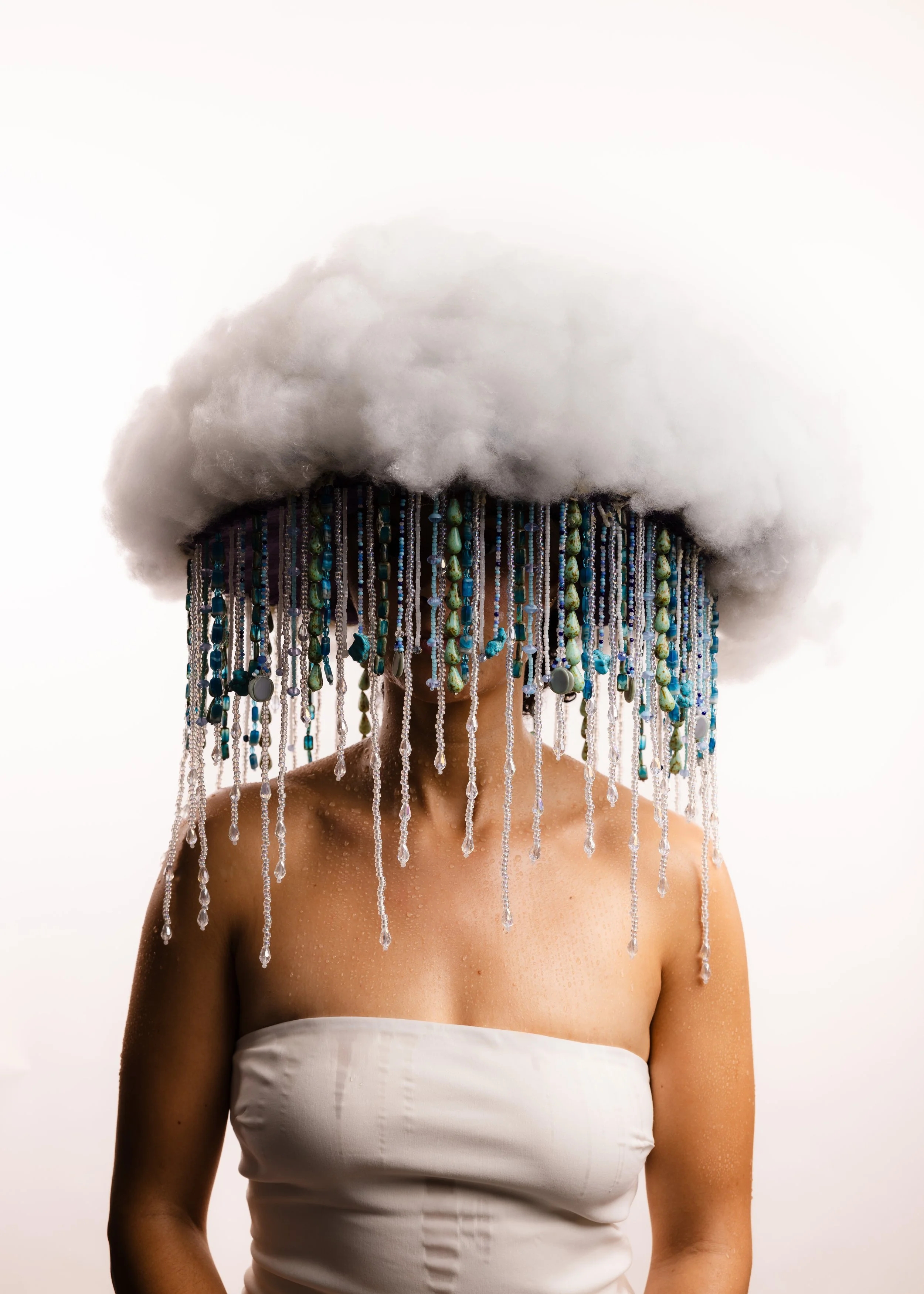
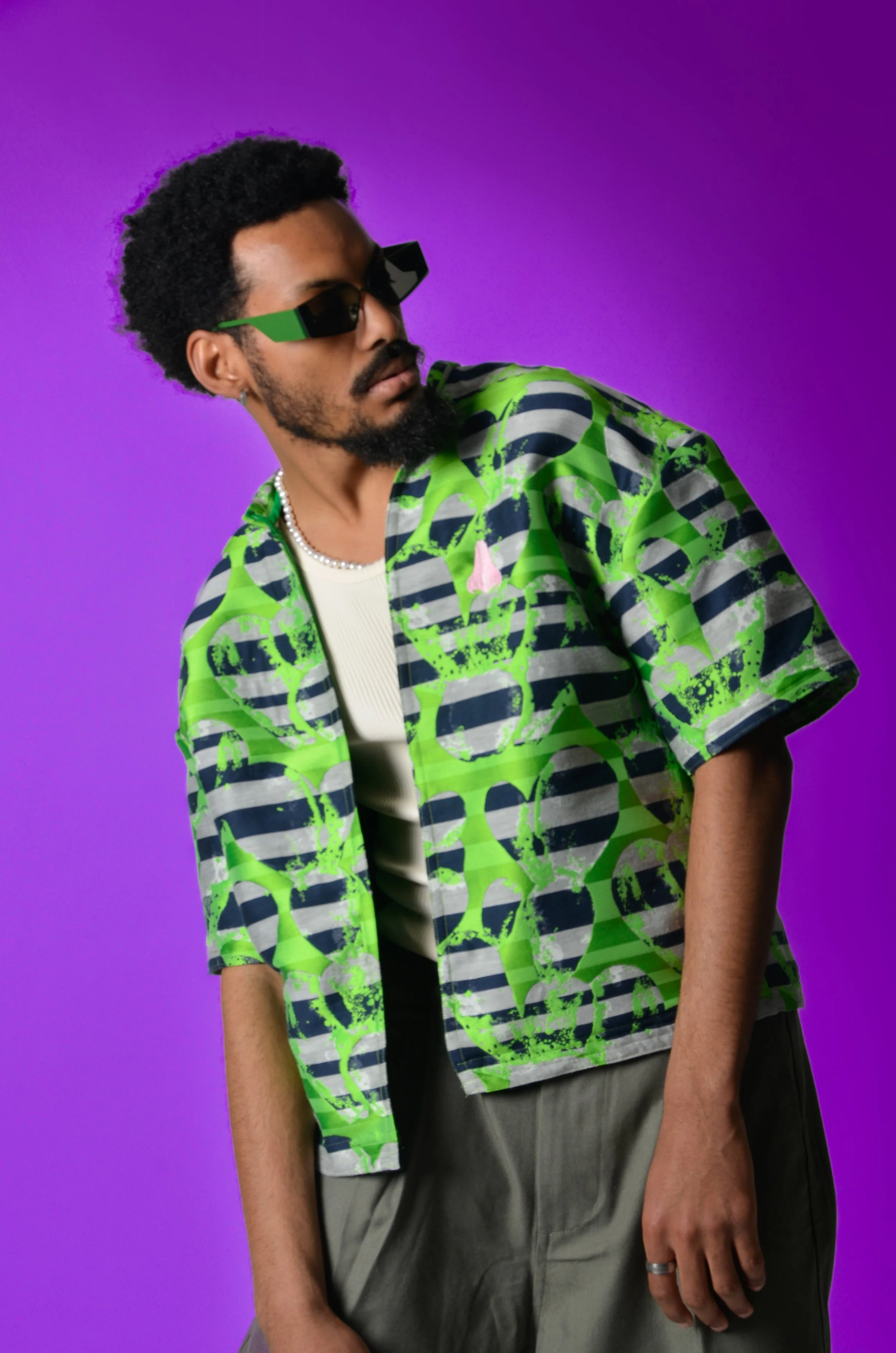
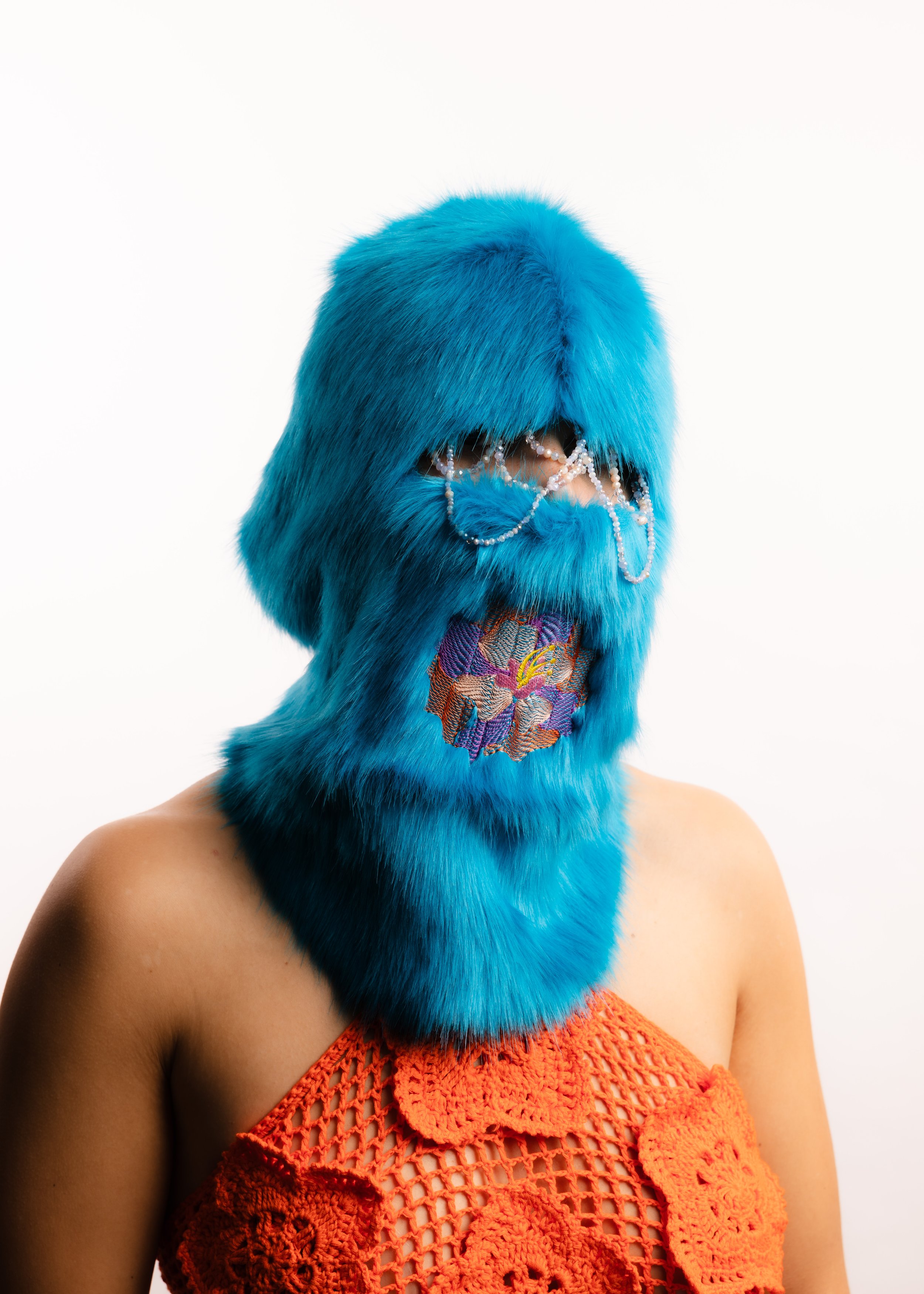
Wievien is an intuitive and distinctive designer with a strong sensitivity to style and colour. Working in a playful and instinctive way, she creates designs that push boundaries and explore identity. In her work, she examines, among other things, the transformative power of masks, using them to make personal emotions and different facets of identity visible. Humour, experimentation and an unexpected twist are important elements of her signature style.
Paired with:
Mestreechter Geis
What appealed to you about this person or their story?
What appeals to me most about the Mestreechter Geis is the humour, playfulness and individuality associated with it. Humour is also an important part of my own work, and I like to use it to give a design character and challenge expectations. Because the Mestreechter Geis is not a person, but rather a feeling and a way of being, it gives me the freedom to interpret the concept in my own way.
How did you translate this into your design?
In my design, I translate these qualities through embroidery and unexpected details. Using images, symbols and small accents, I tell a story in which different aspects of Maastricht and the Mestreechter Geis come together. Some details are clearly visible, while others are only discovered up close. This creates a playful and layered design in which humour, identity and pride in Maastricht come together.
Marte Morel
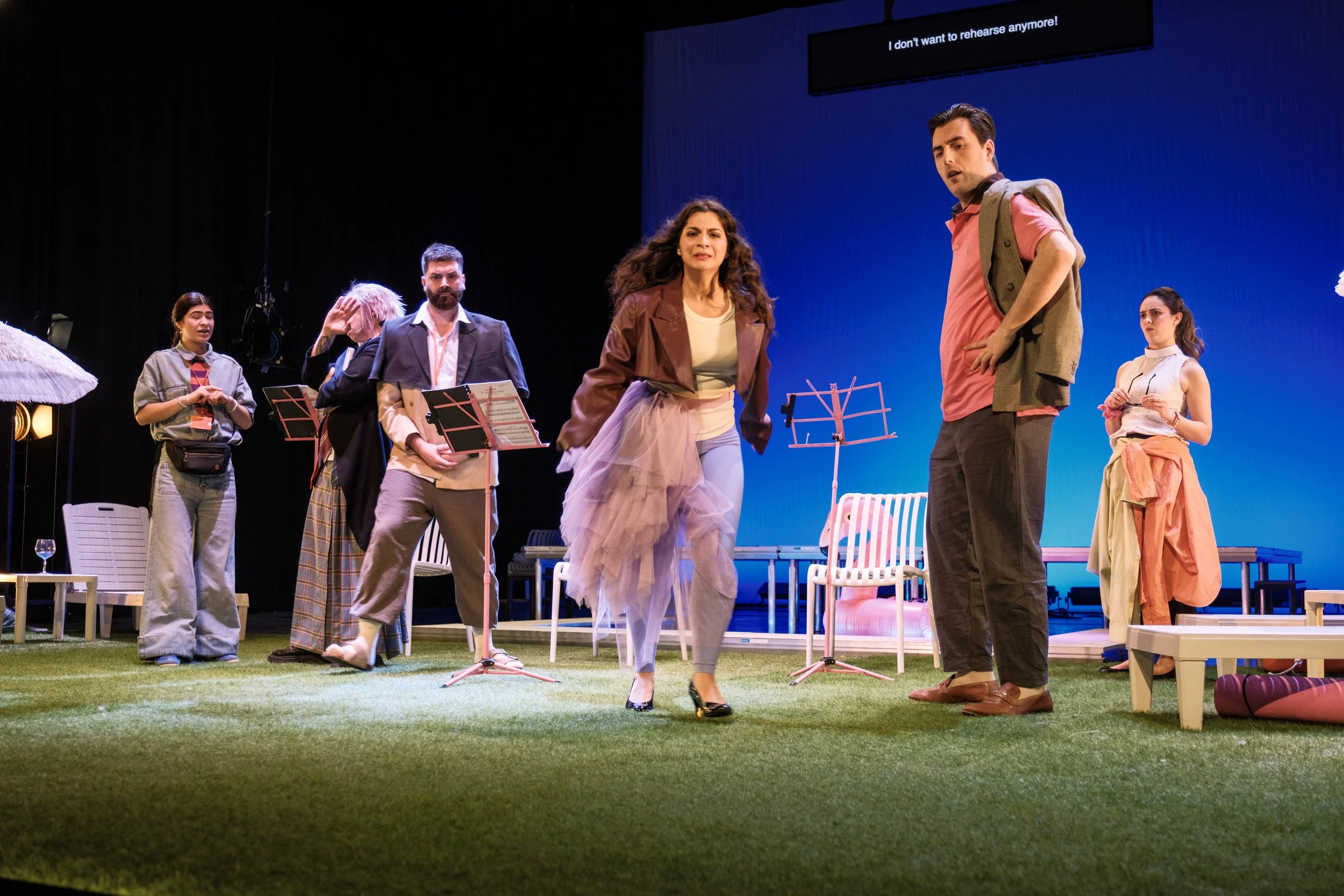
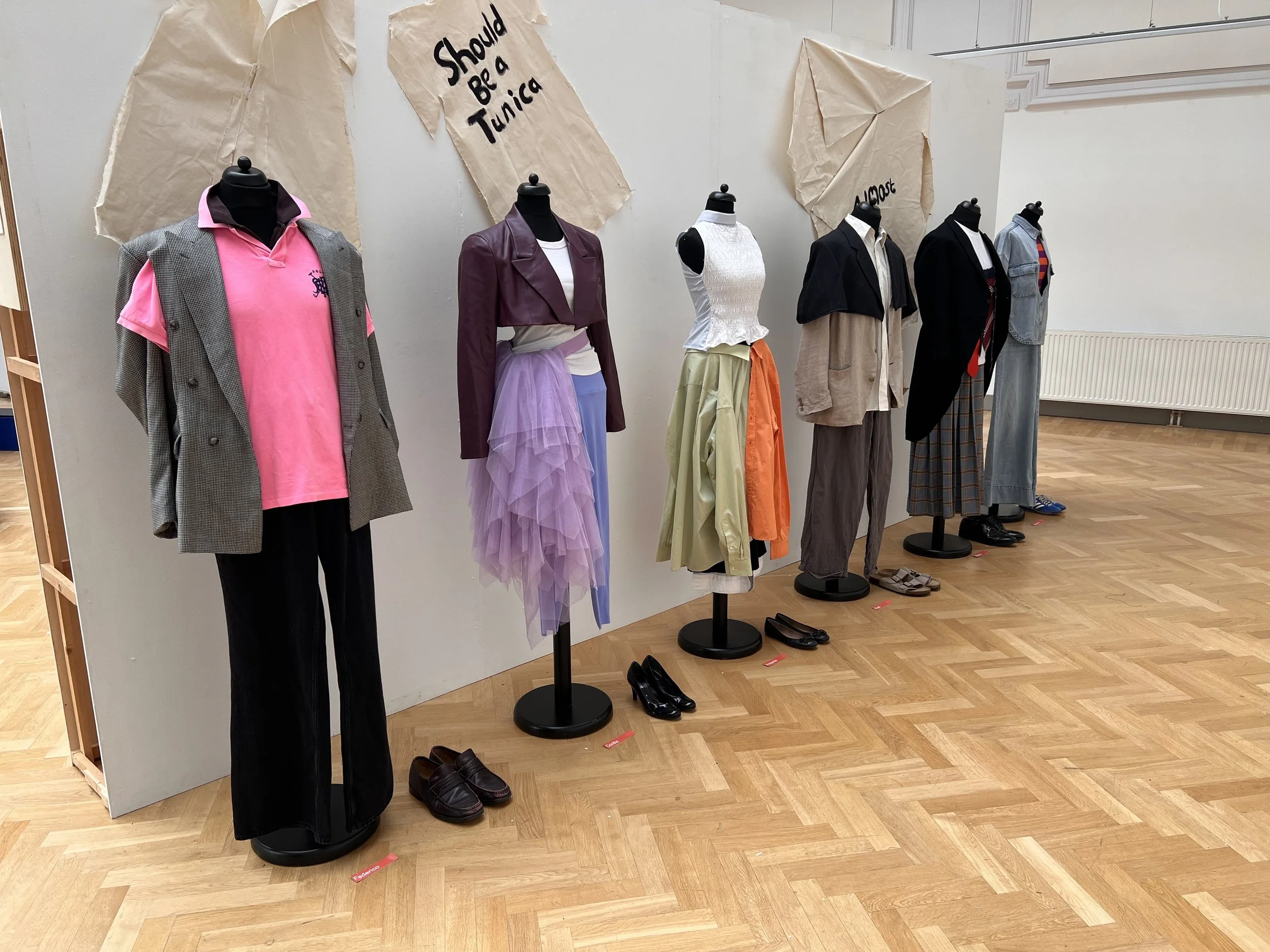
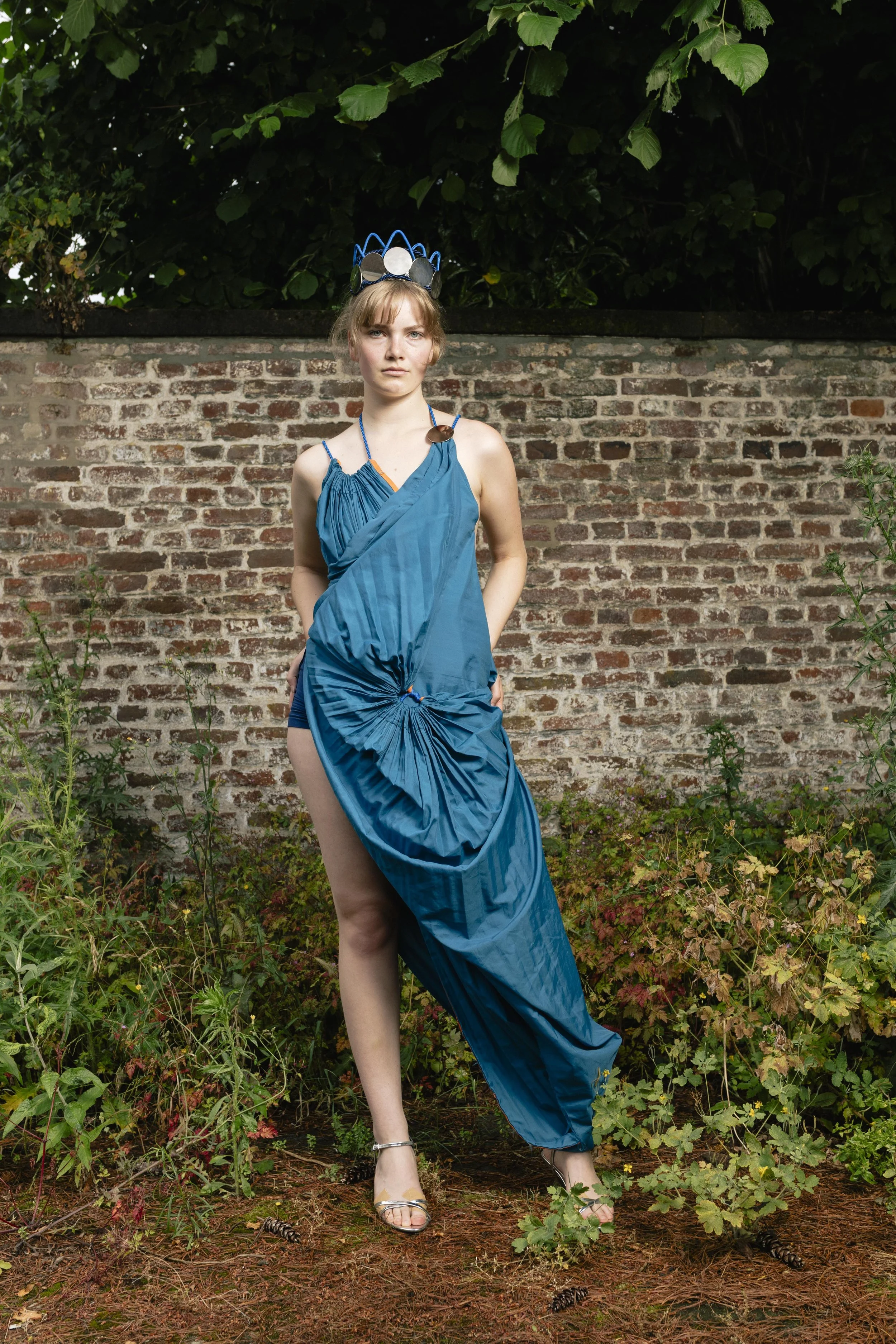
Marte Morel graduated this year as a costume designer from Toneelacademie Maastricht. Her knowledge and passion lie at the intersection of costume history and fashion. Marte regularly performs in her own work. From a personal perspective, she explores major themes, which she then translates into cinematic imagery and photography.
Paired with:
Fama, Goddess of Fame
What appealed to you about this person or her story?
Fama proclaims the fame of Maastricht and its inhabitants. She has thousands of eyes and mouths to let everyone know how beautiful the capital of Limburg is. With her long trumpet, she spreads the good news and celebrates the city’s renown. The famous people of Maastricht owe their fame to this goddess.
How did you translate this into your design?
Because Fama was originally a Roman goddess, the historical character of her costume plays an important role in my design. Symbolically, she wears stars that refer both to the coat of arms of Maastricht and to famous people from the city.
Who knows — perhaps you will have a star placed in your hand and become a famous person yourself!
Floris van Lammeren
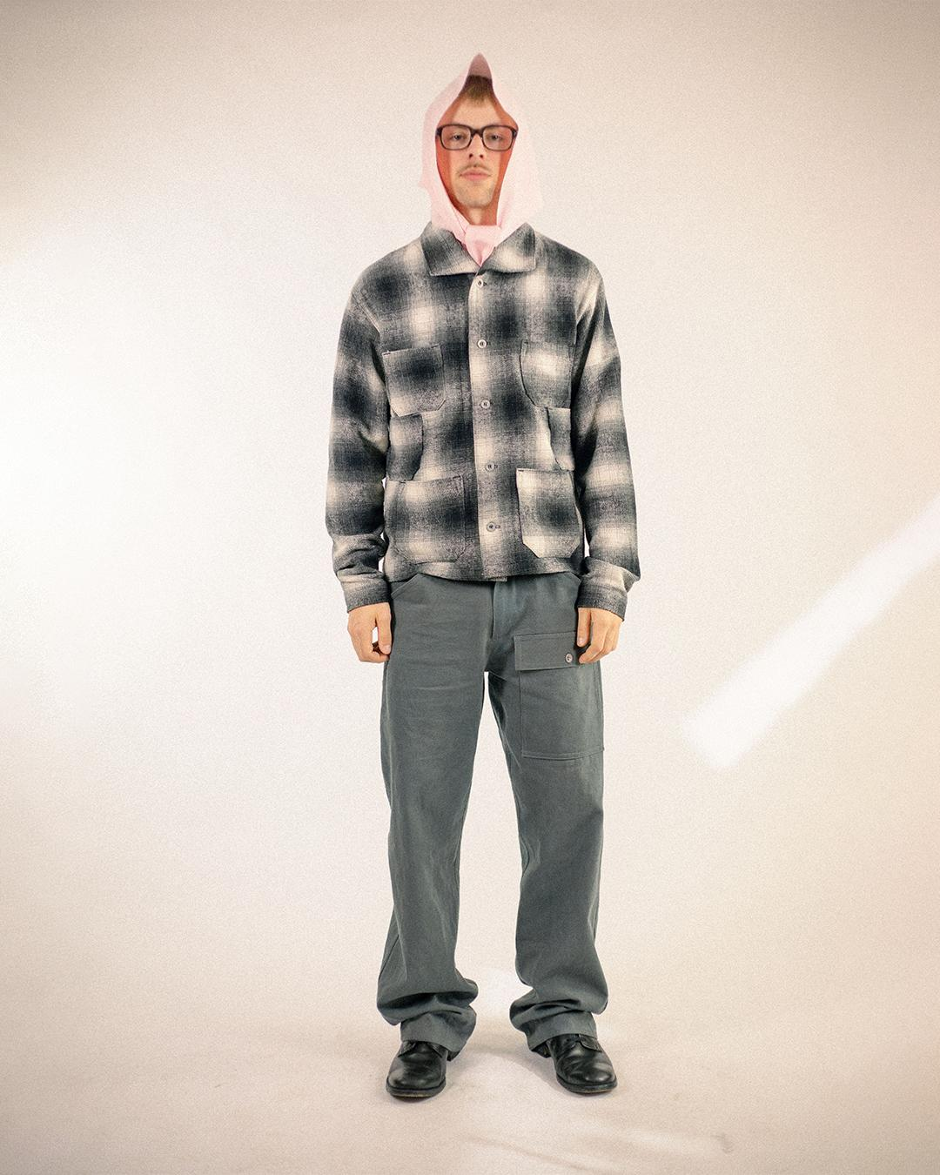
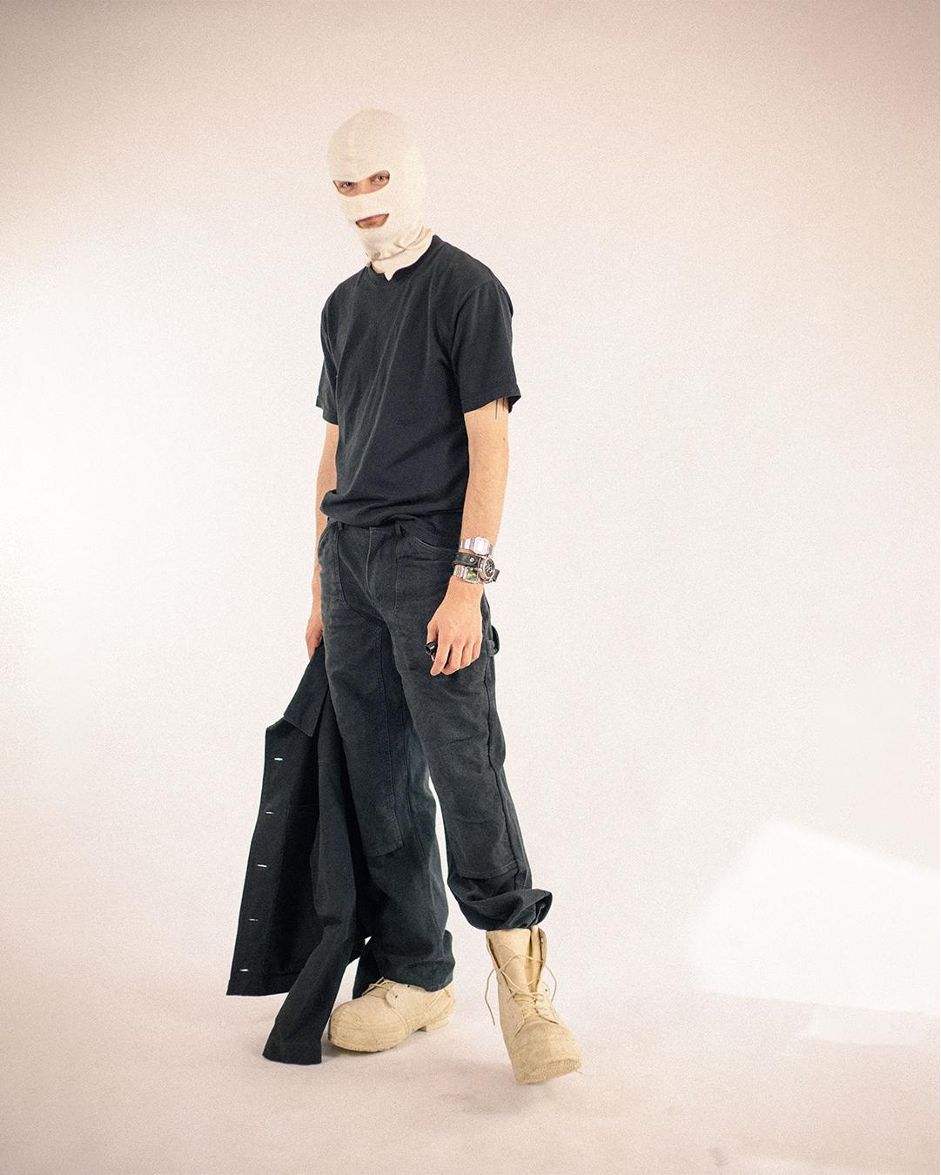
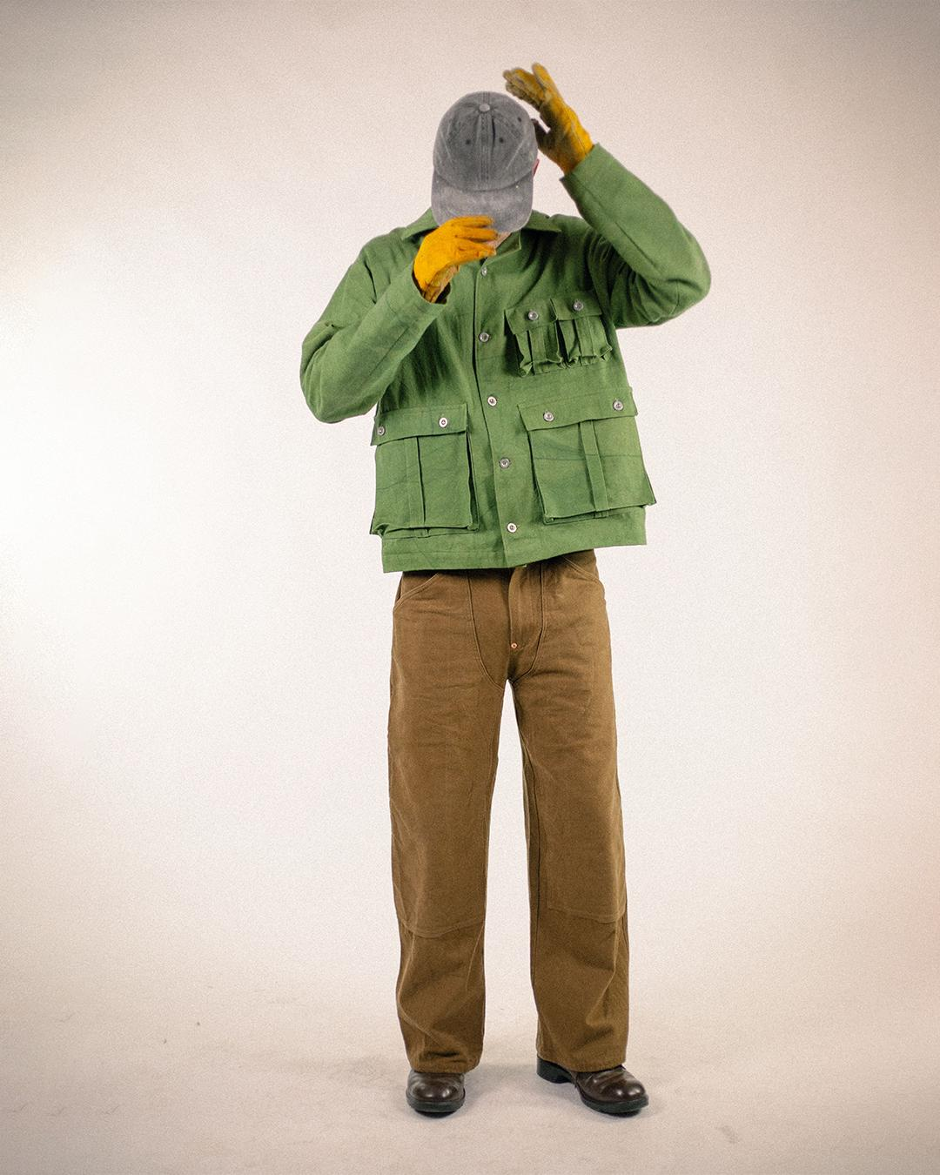
From Het Stort, Floris van Lammeren creates on-demand clothing inspired by workwear and military uniforms. Each garment is made to measure for the wearer and tailored to their personality, work and movement. Functionality and attention to detail are at the heart of his practice. Floris prefers to collaborate with other makers, such as blacksmiths, painters and bronze casters, to create garments that become part of their practice. The result is personal, functional and unique clothing.
Paired with:
Petrus Laurentius Regout
What appealed to you about this person or his story?
What appeals to me about Petrus Regout is the combination of entrepreneurship and industrialisation, and in particular the transition from craftsmanship to large-scale factory production. This development not only changed the way people worked, but also played an important role in the development of modern Dutch industry.
At the same time, I find it important not to tell only Regout’s story, but also to draw attention to the people of Maastricht who worked for him. Behind the success and growth of the industry were the workers who carried out the physical labour in the factories every day.
How did you translate this into your design?
My outfit is designed as a visual division between Petrus Regout and the factory worker. By bringing these two worlds together, the garment represents both the power and ambition of the entrepreneur and the hard work of the labourer.
The upper part, consisting of a jacket and blouse, is inspired by the way Petrus Regout wanted to present himself: as a prominent and influential figure. These elements convey status, authority and ambition. The lower part, consisting of trousers and an apron, refers to the clothing and work of the factory workers, with functionality, movement and labour at its centre.
By bringing these two extremes together in a single design, I want to tell not only the story of Petrus Regout, but also give a voice to the workers who were an essential part of his success. The outfit therefore represents two distinct social worlds that are inseparably connected.
Linda Friesen
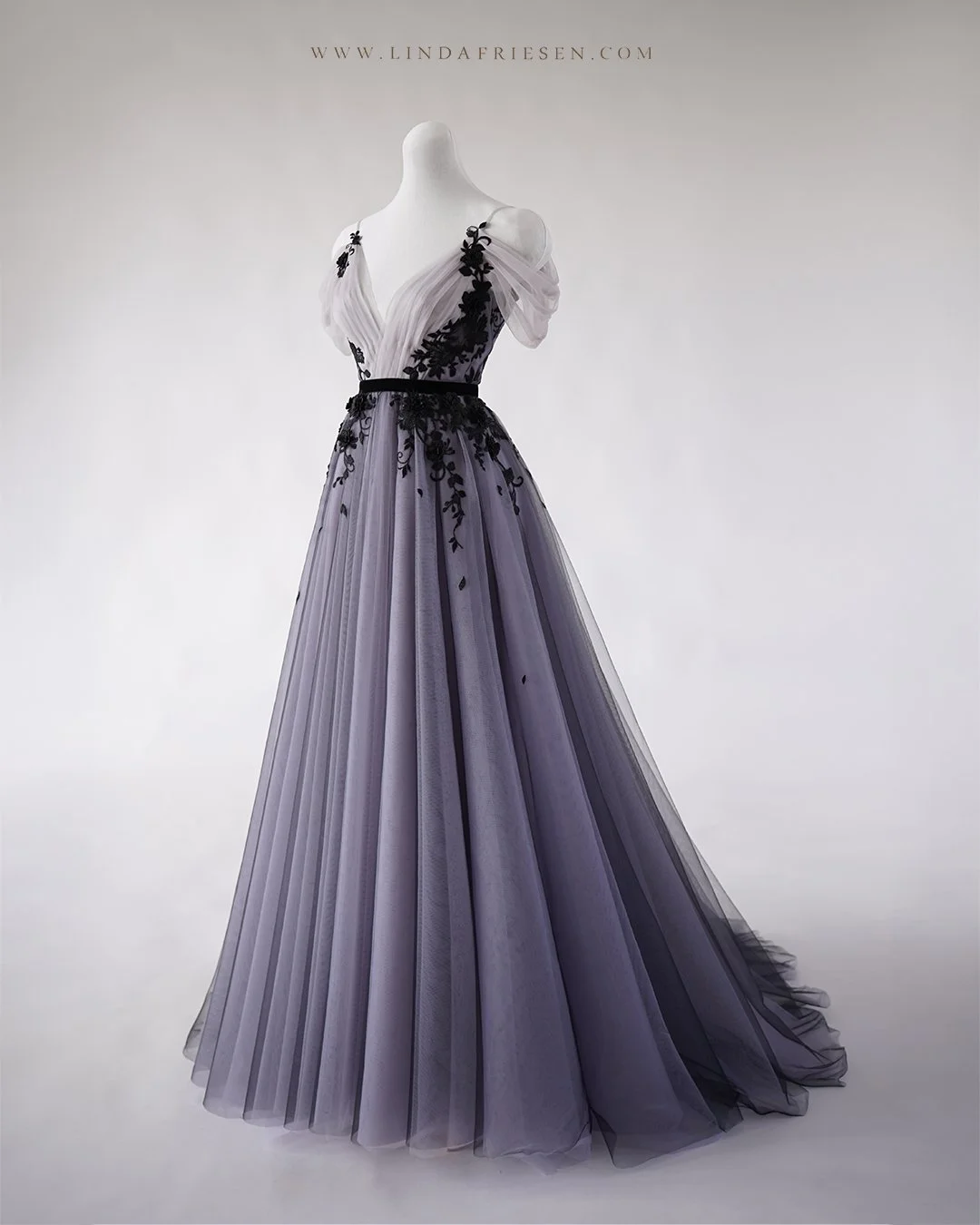
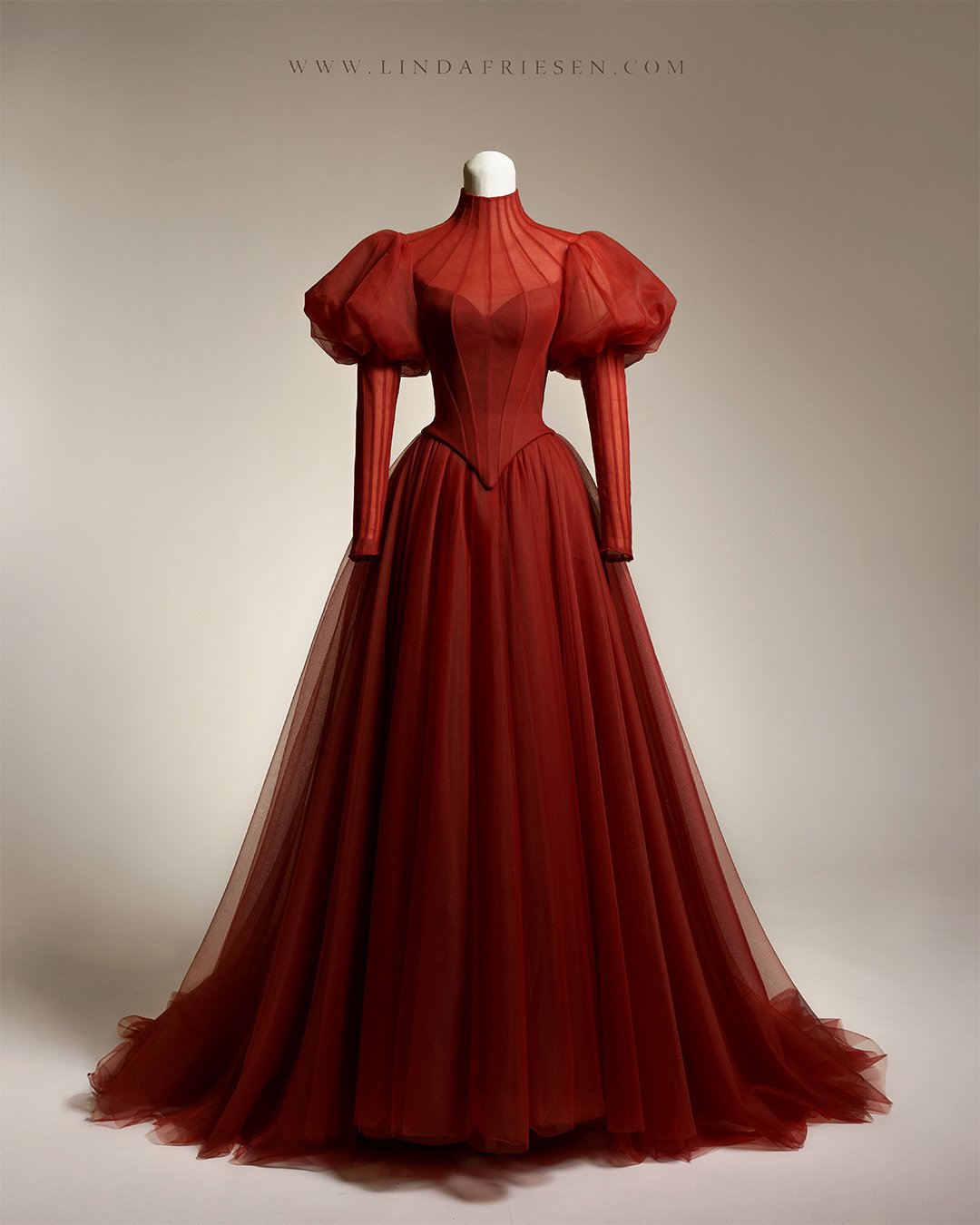
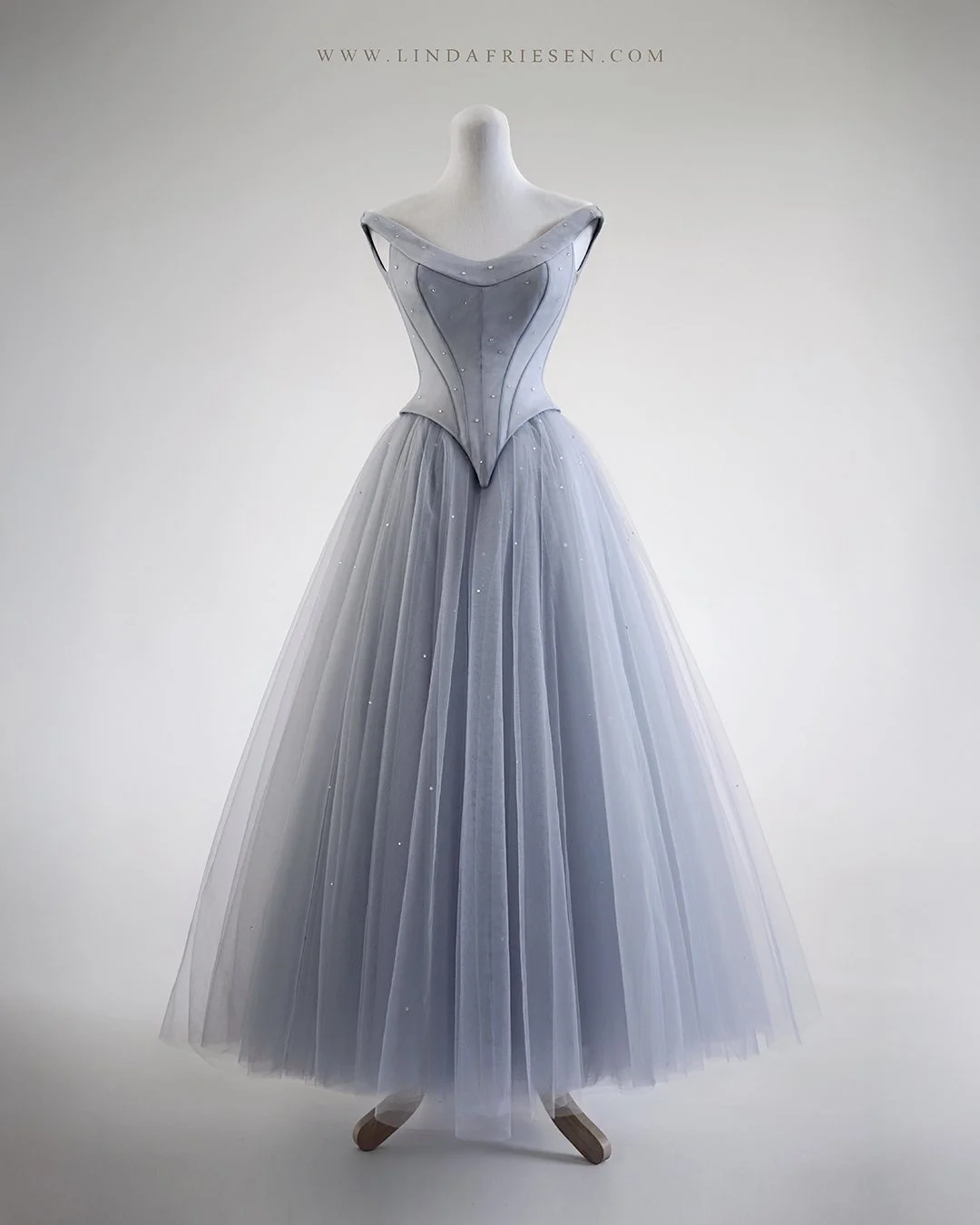
Linda Friesen graduated in 2009 as a fashion designer from the art academy in Maastricht. During her studies and in the years that followed, she developed a distinctive and recognisable style of her own. She translates inspiration from historical clothing, dark fairy tales and folklore into contemporary designs with strong silhouettes, romantic fabrics and an eye for detail. Storytelling is central to her work: to Linda, a dress is not simply a dress, but a wearable fairy tale, a story that comes to life as it moves. For many years, she has been creating dream dresses for brides all over the world.
Paired with:
Karel de Grote (Charlemagne)
What appealed to you about this person or his story?
What immediately appealed to me was that he was a historical figure. History and historical clothing have always fascinated and inspired me. Stories from the past strongly fuel my imagination.
While researching Charlemagne, I learned that he was a man of little fuss: practical and charismatic. He was tall for his time and a true warrior. In later paintings and depictions, he is often portrayed wearing royal armour, with a richly draped velvet cloak around his shoulders. This became the inspiration for my design.
How did you translate this into your design?
The design is simple and has little ornamentation, but is built from strong shapes. The armour forms the basis, but is executed in velvet: a rich, regal fabric. The colour red refers to the army.
Michelle Cornelissen & Sabina Schreurs
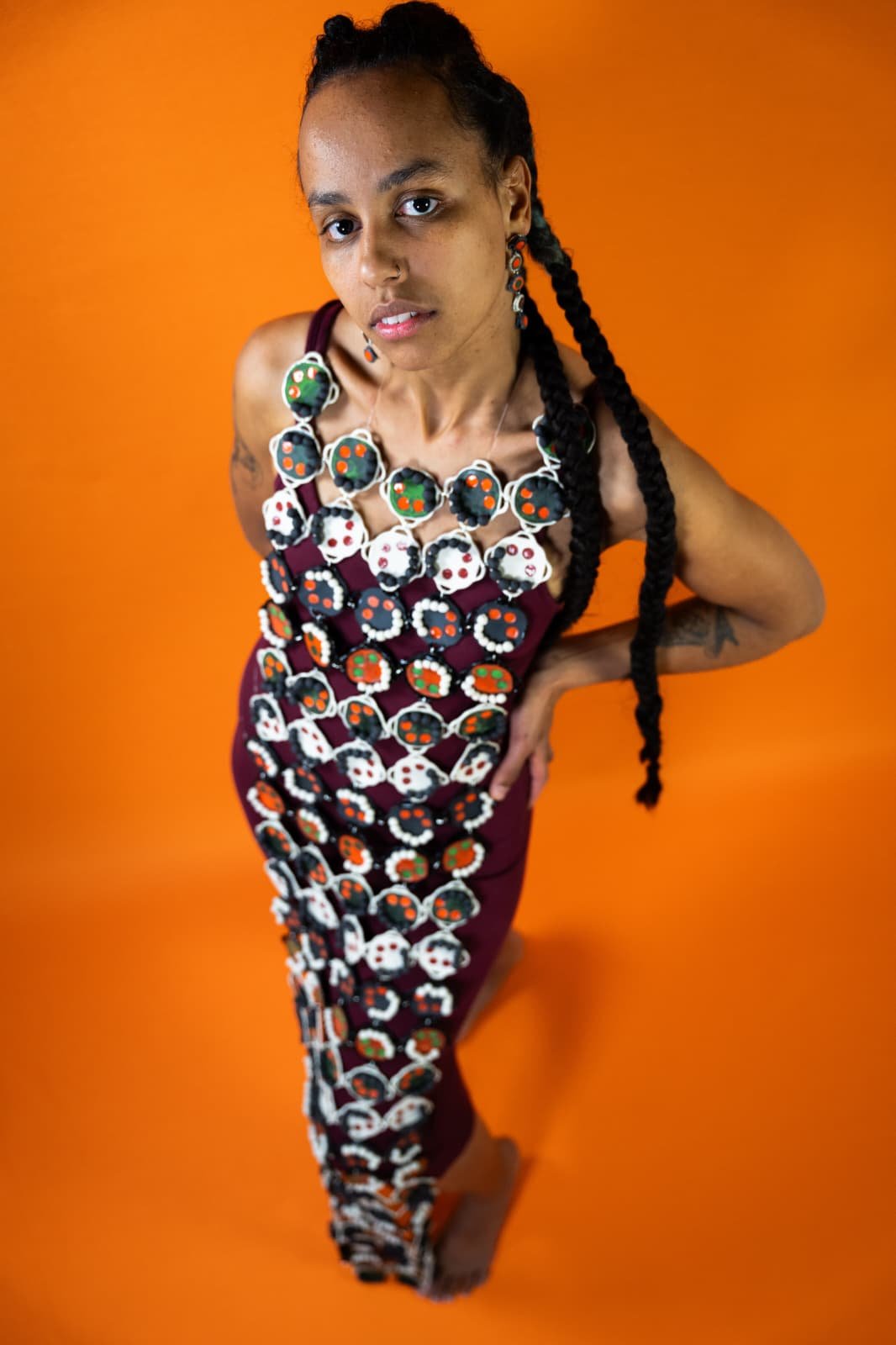
Short Bio — Michelle Cornelissen
Michelle Cornelissen is a costume designer working in the world of identity branding, where character development is central to her designs. From her studio, she moves between a wide range of creative worlds: from collaborations with DJs from the hardstyle scene, such as Warface and Sub Zero Project, to film productions by Dylan Haegens and Drag Race Holland, as well as her work as a costume couturier for Opera Zuid.
Her artisanal approach is the common thread throughout her practice. By combining streetwear with conceptual designs, she creates dynamic costumes that not only strengthen identity, but also amplify and transform it. Her fascination with the possibility of manipulating, shaping and reinventing yourself formed the foundation for her label MICHI’M.
Short Bio — Sabina Schreurs
Sabina Schreurs is a Kenyan-Dutch multidisciplinary artist and designer based in Maastricht. Her personal experiences and life story are important sources of inspiration for her work. Drawing from her own perspective and reflections, she creates authentic designs that centre on socially relevant themes. Through her work, she aims to raise awareness and give visibility to people facing similar challenges, so that they feel seen, understood and represented.
Paired with:
Willy Brokamp
What appealed to you about this person or his story?
Willy Brokamp was a highly accomplished footballer from Maastricht. Because of his exceptional success, he was given a status that became inseparably linked to his identity. What fascinates us is the question of whether he shaped this identity himself, or whether it was largely determined by what those around him expected of him.
Exceptional talent can, at a certain point, also be experienced as a form of pressure. The expectations that come with success can become at least as defining as the talent itself.
Brokamp is described as a living legend: an unconventional man who is deeply connected to his city. His heart has always remained in Maastricht. He even literally anchored this connection through his own café, Aux Pays Bas, on the Vrijthof.
It is precisely the tension between talent, status, expectations and personal identity that forms the starting point for our story.
Deniece Clermonts & Max Niereisel
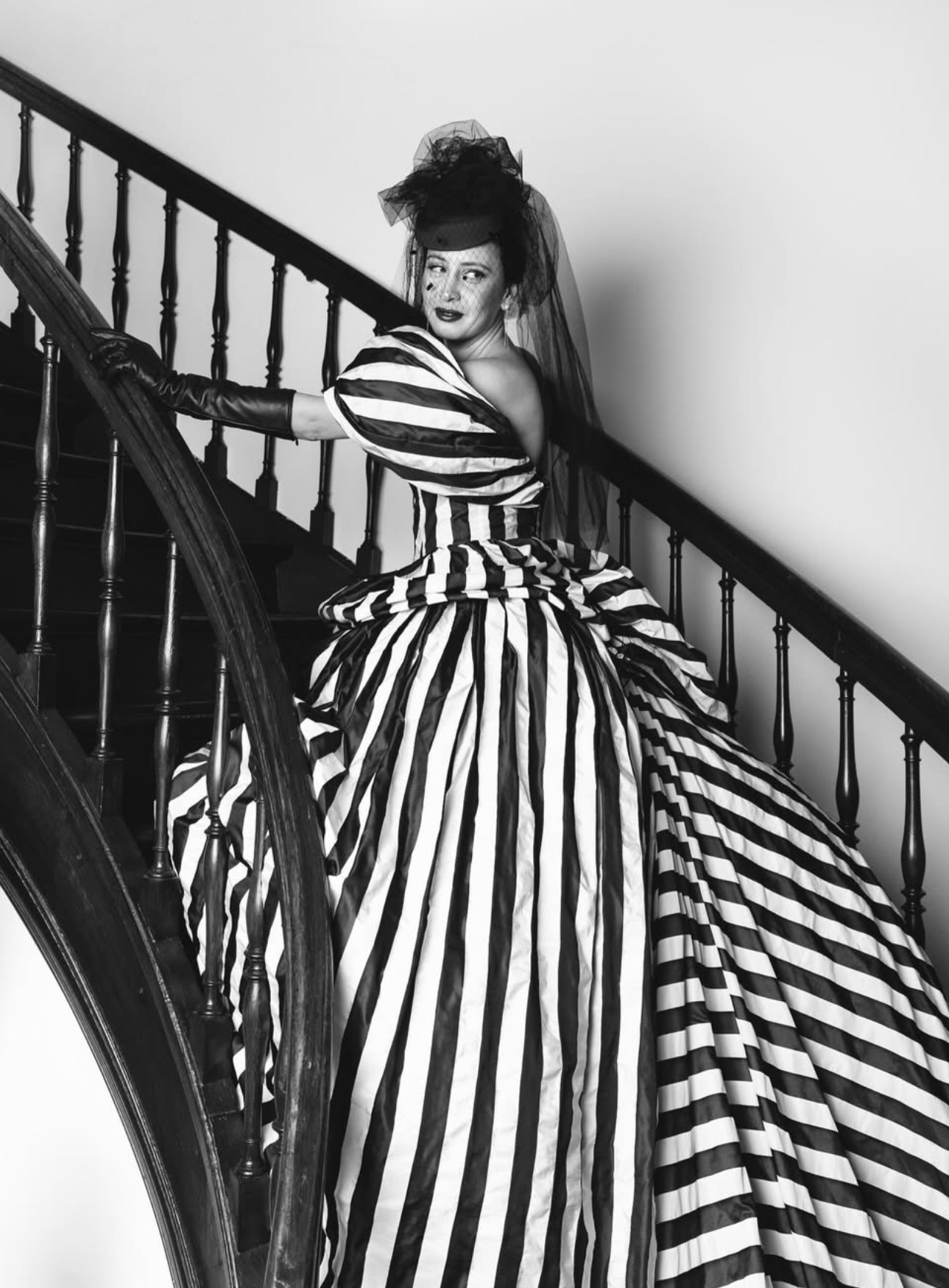
Short Bio — Deniece Sami Juliana Clermonts
Deniece Sami Juliana Clermonts is a multidisciplinary artist working across drawing, painting, textiles and performance. Through intuitive drawings, she explores themes such as identity, self-expression and the subconscious. With a background in fashion design, she also translates this visual language into textiles and clothing. Since 2018, she has been working from her own print collection, scribbleD, in which psychological explorations are translated into printed fabrics and upcycled clothing, using techniques such as screen printing and painting directly onto textiles.
Short Bio — Max Niereisel
Max Niereisel is a fashion designer from Maastricht. In his work, he seeks a balance between historical elegance and contemporary fashion. He draws inspiration from timeless silhouettes, pronounced femininity and theatrical details, combining these with a contemporary and wearable approach. Since graduating from the Maastricht Academy of Fine Arts and Design in 2019, he has developed his own style through collaborations, independent projects and fashion presentations. His work is characterised by expressive silhouettes, refined craftsmanship and a fondness for garments that tell a story.
Paired with:
André Rieu
What appealed to you about this person or his story?
The world of André Rieu, with its classical music, romance, grandeur and theatrical spectacle, closely aligns with our shared design vision. We are drawn to the elegance, femininity and nostalgia of his performances, as well as the sense of drama and celebration that makes his shows so recognisable.
How did you translate this into your design?
Rather than literally reconstructing historical costumes, we wanted to translate the essence of André Rieu’s world into contemporary fashion. Classic silhouettes, accentuated waists, voluminous shapes, luxurious fabrics, bows and theatrical details were given a contemporary interpretation through our own vintage-inspired style.
The design thus creates an encounter between Maastricht’s rich cultural heritage and contemporary fashion: romantic, glamorous, theatrical and unmistakably our own.